Opening Reception for Collecting the New Irascibles: Art in the 1980s is a ‘tremendous success’
February 3, 2026
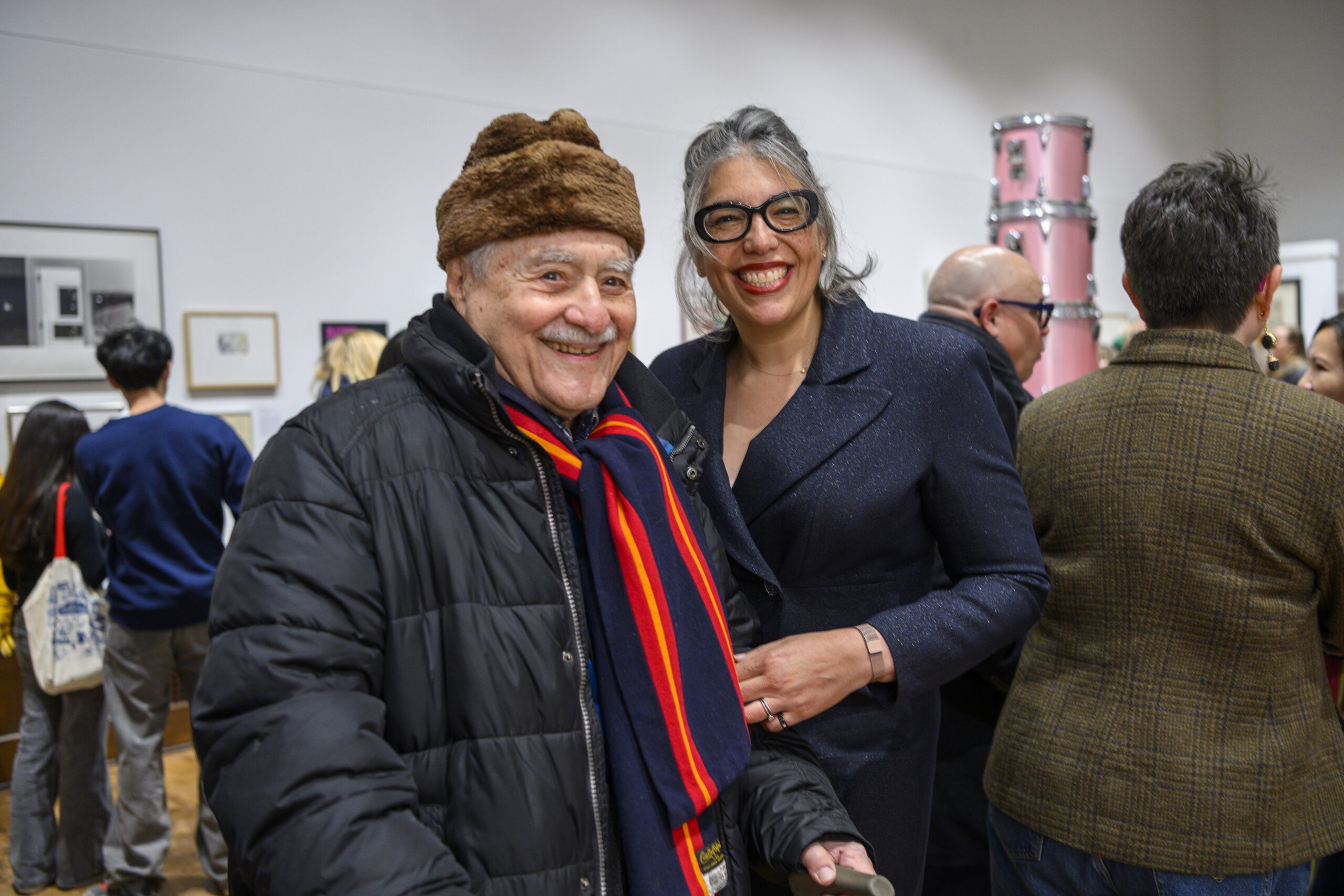
Gwendolyn DuBois Shaw (right), Arthur Ross Gallery Faculty Director and Penn history of art professor, with art collector and Penn alum Hubert Neumann who loaned several artworks for the exhibition.
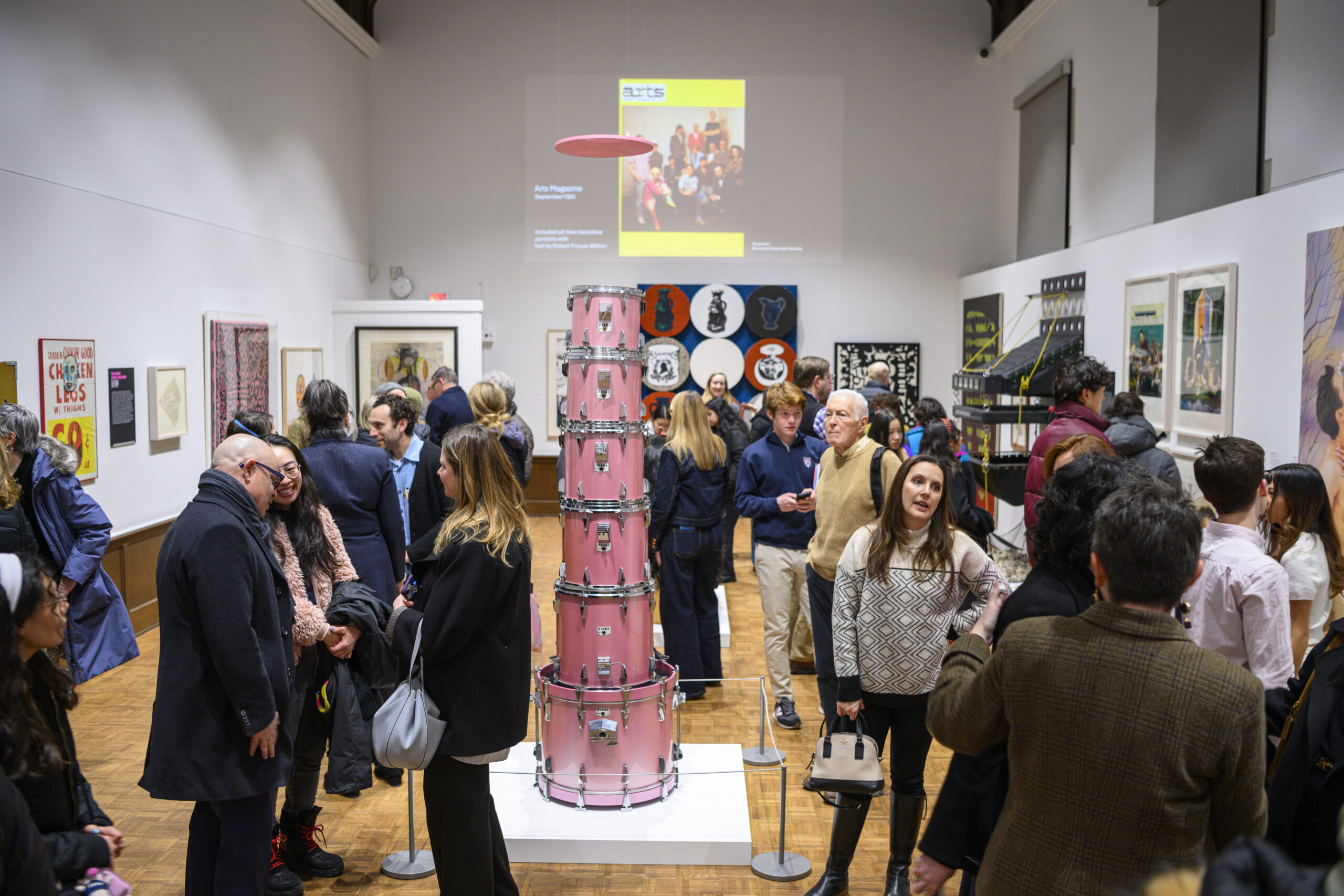
More than 300 people attended the opening of the Jan. 30 opening of Collecting the New Irascibles: Art in the 1980s.
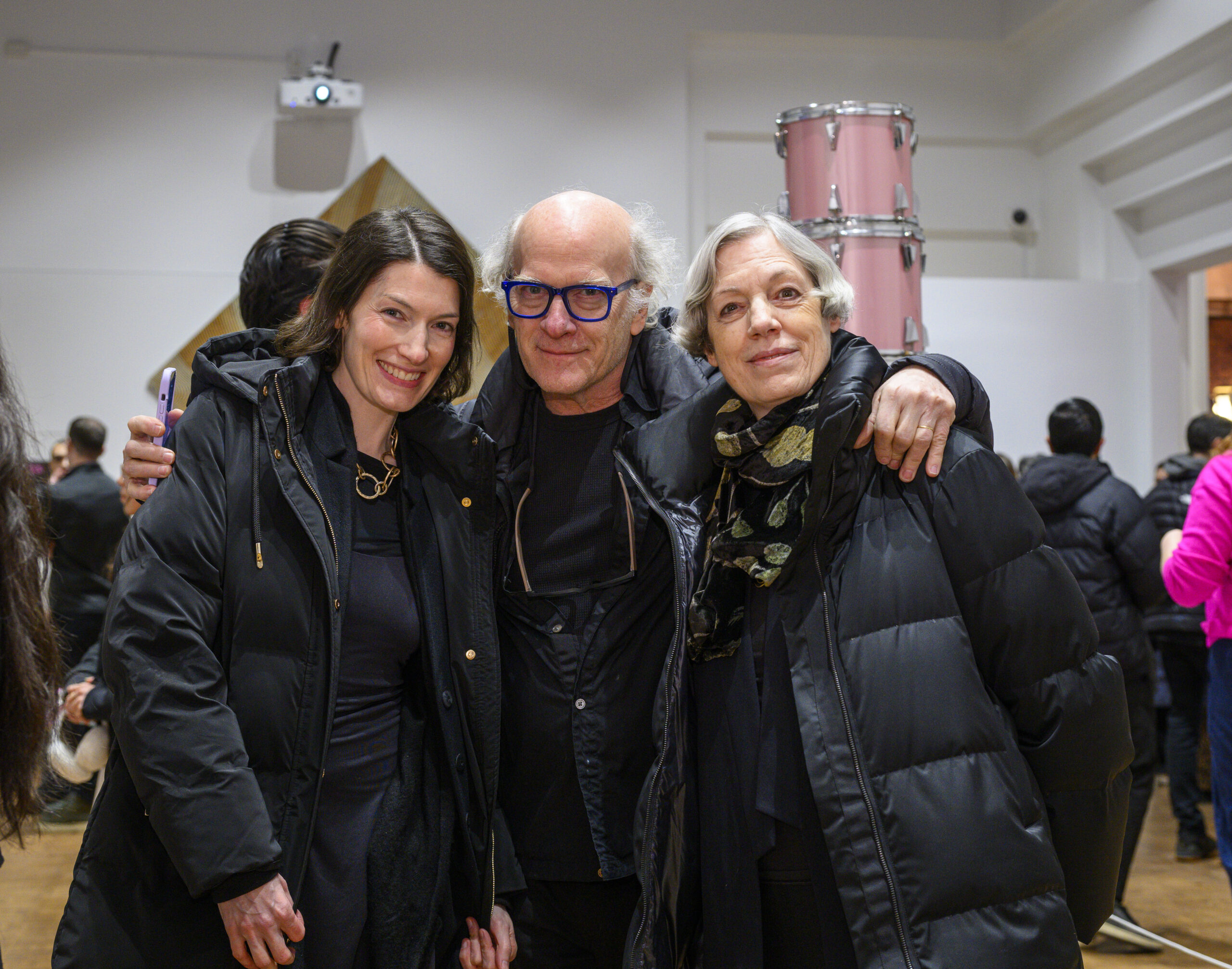
Photographer Timothy Greenfield-Sanders (center) with his wife Karin (right) and daughter Isca.
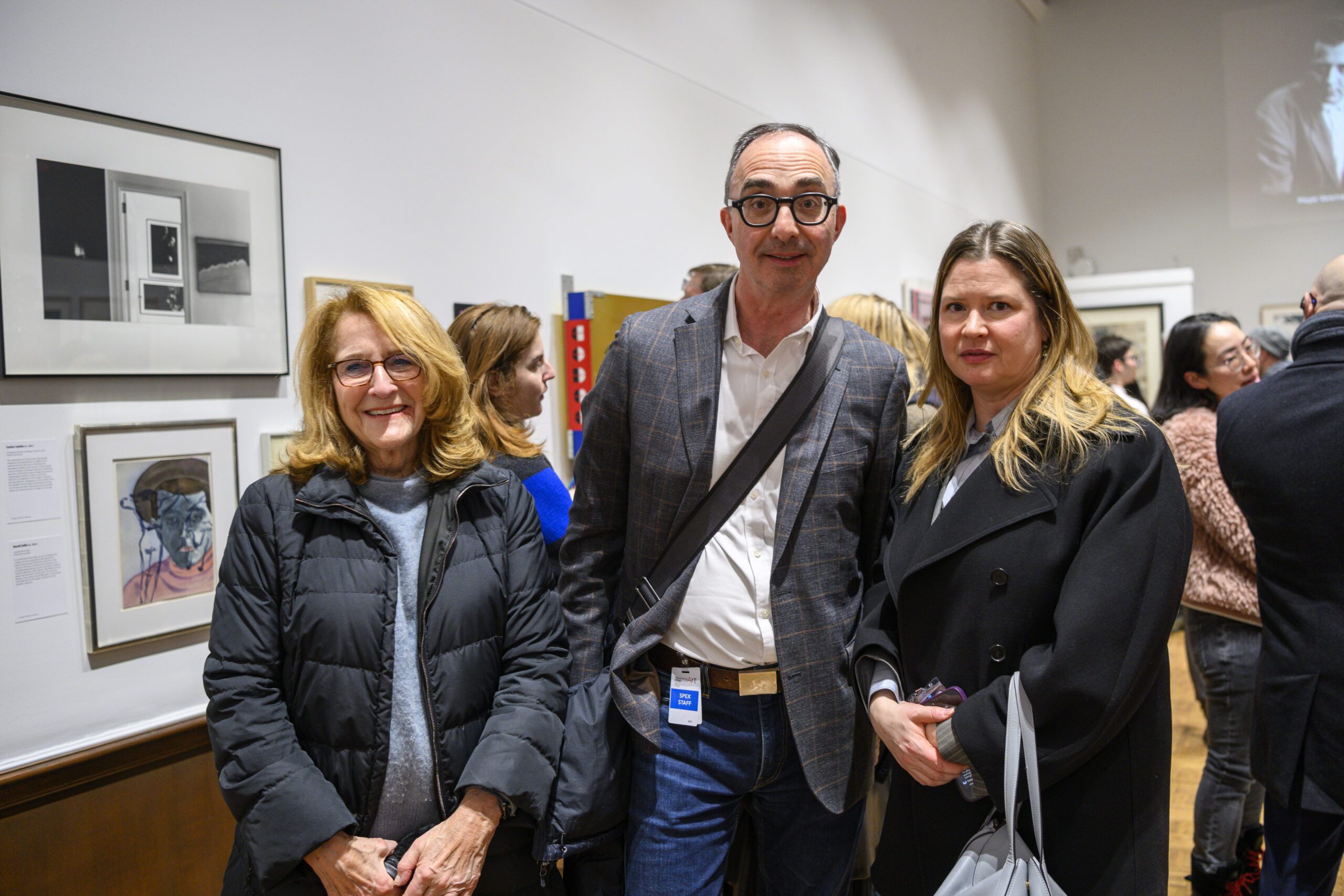
Penn alum Katherine Sachs (left), who established the Sachs Program for Arts Innovation, with Matthew Affron (center), curator of modern art at the Philadelphia Art Museum, and Johanna Burton (right), Director, Institute of Contemporary Art.
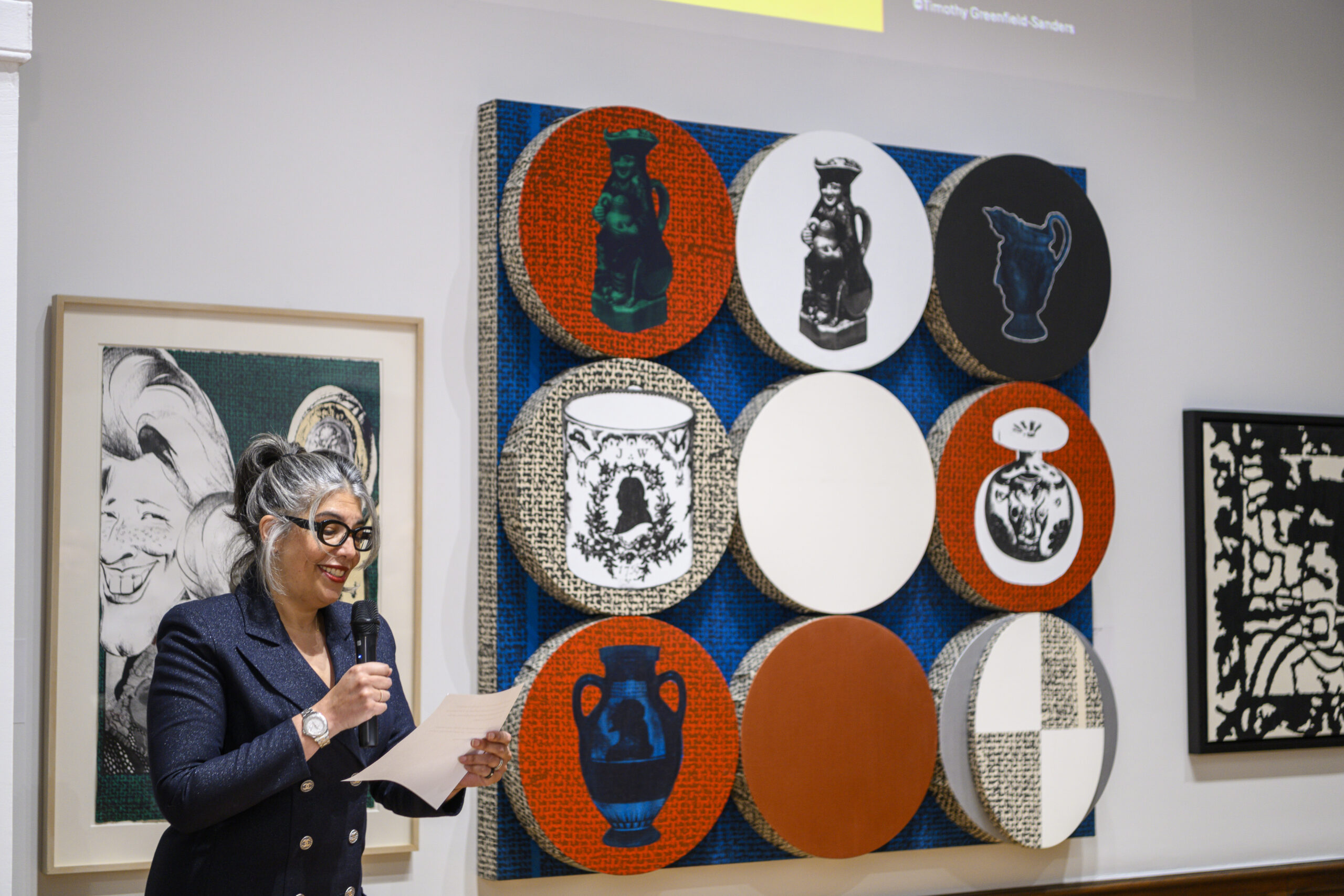
Gwendolyn DuBois Shaw speaking during the opening.
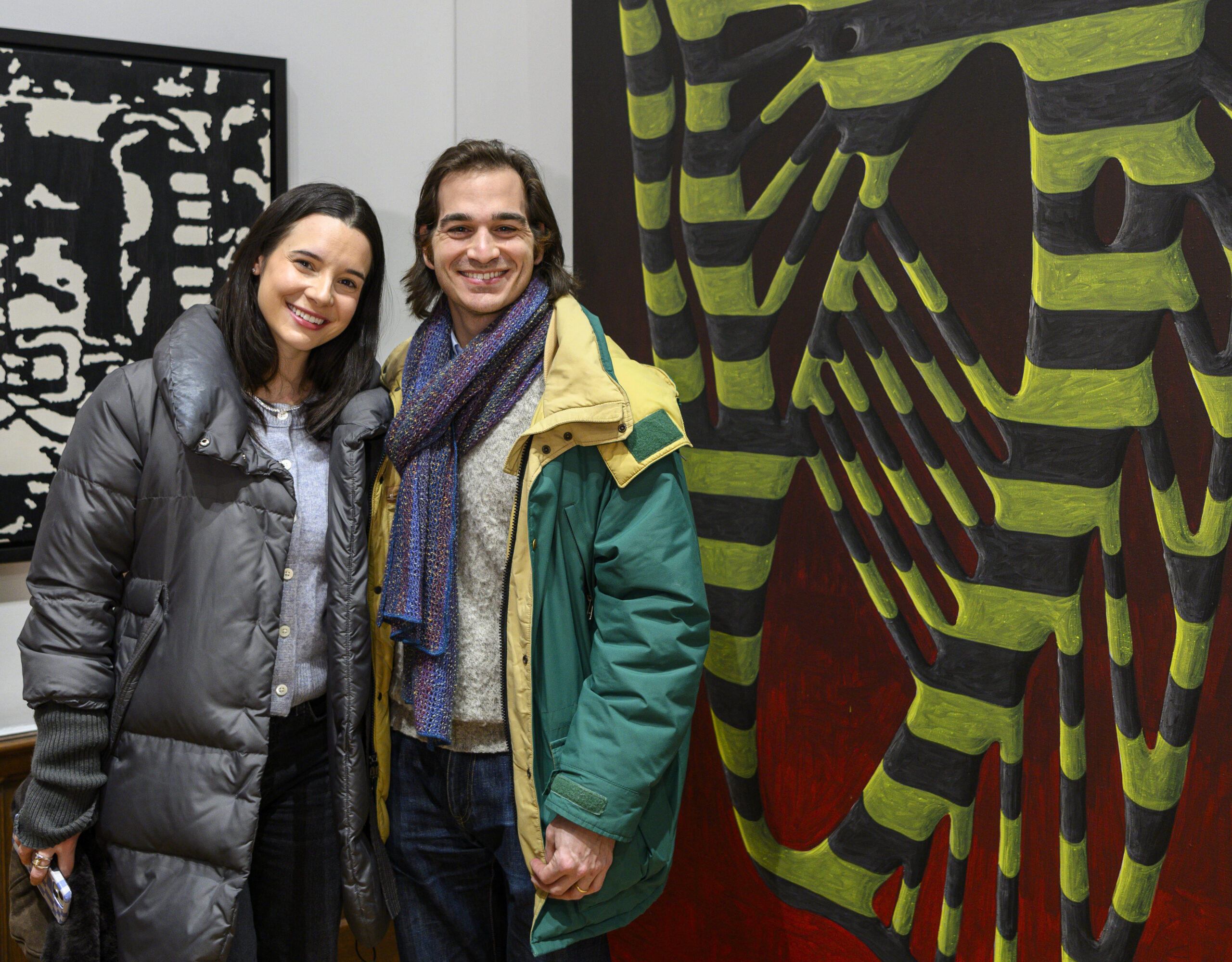
Penn alum Alexander Schwartz and his wife with the painting (right) they lent to the exhibition, Joe Cool, 1984, by artist Peter Schuyff.
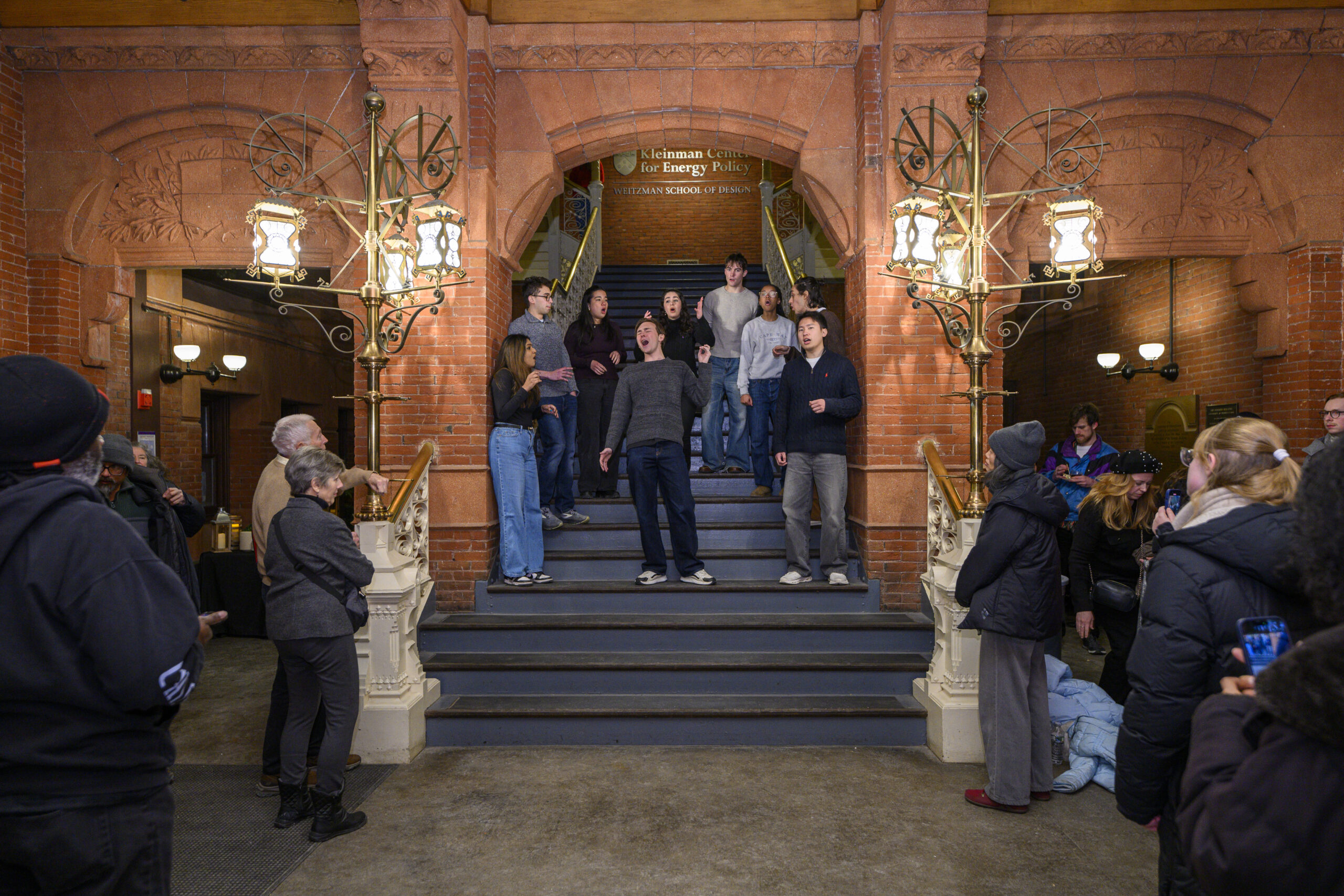
The Penn student a capella group Off The Beat performed for guests.
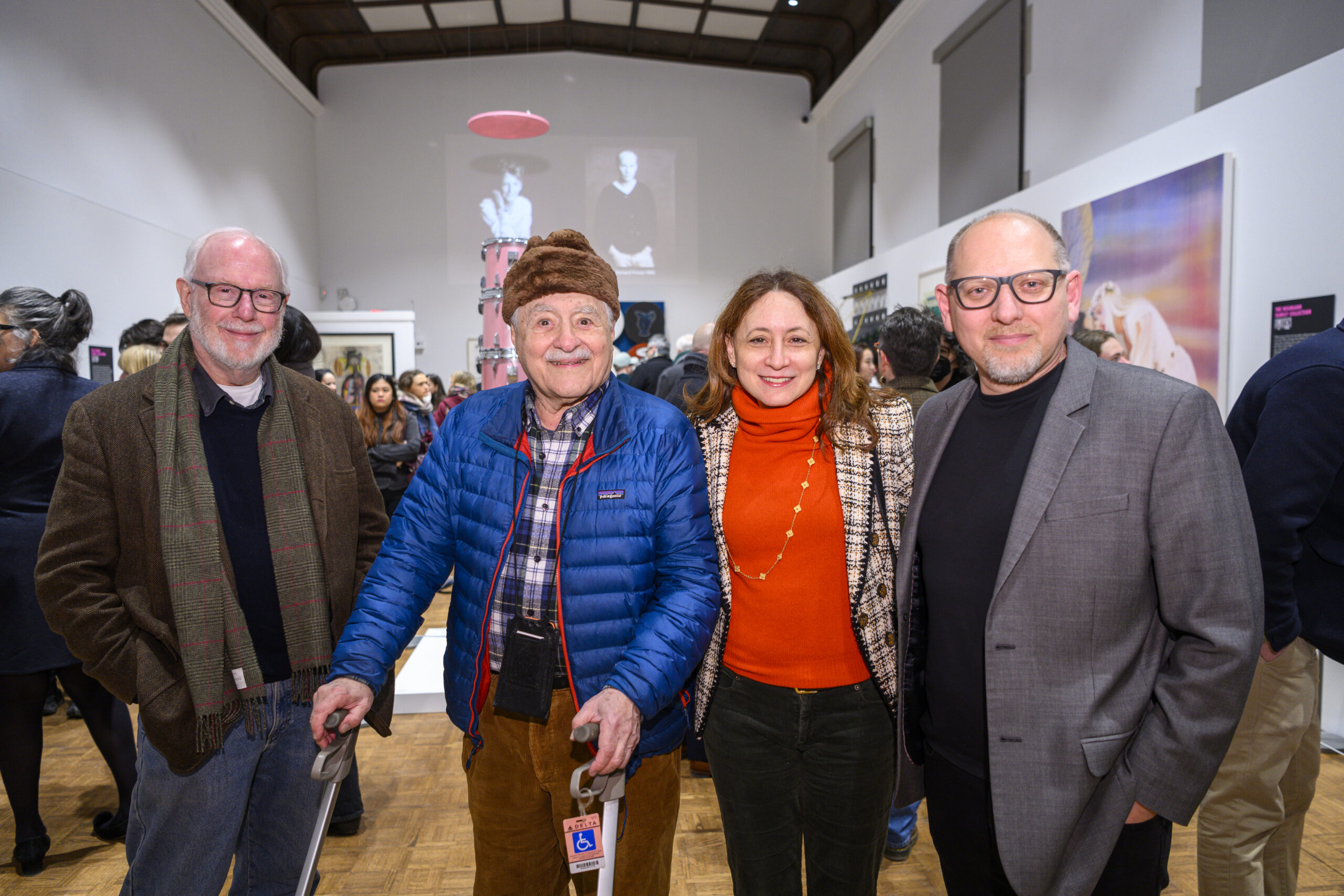
From left: Art historian Jonathan Fineberg, Hubert Neumann, Melissa Neumann, and Penn Professor Peter Decherney, Director of the Penn Global Documentary Institute.
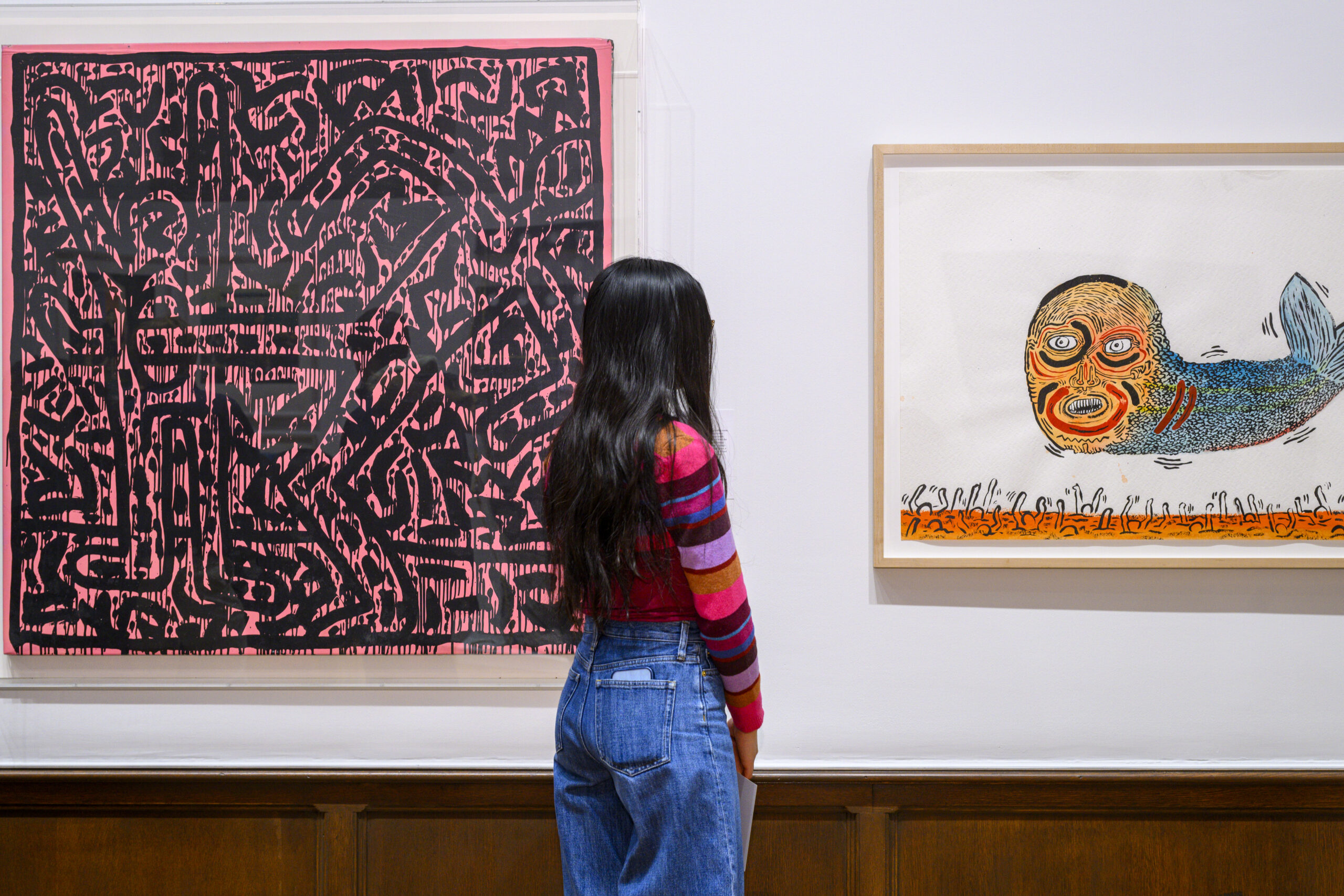
A student engages with works by Keith Haring: Untitled (pink and black), 1981, and Untitled No. 3 (Large Fish), 1987.
The weather was frigid outside but the atmosphere was sizzling inside the University of Pennsylvania’s Arthur Ross Gallery during the opening reception for Collecting the New Irascibles: Art in the 1980s. More than 300 people attended the Jan. 30 celebration and viewed the 32 extraordinary artworks on loan from a select group of private collectors.
Drawn from the avant-garde cultural world in New York City’s East Village during the 1980s, Collecting the New Irascibles, on view through April 12, 2026, offers a new perspective on the personal connections between collectors and emerging artists, and their impact on the trajectory of art history.
“I think that the quality of the loans is incredible. And to see some of these works that usually never see the light of day, in this kind of context, is really, really exciting,” said David Galperin, Vice Chairman and Head of Contemporary Art for Sotheby’s in New York. “I’m seeing a lot of them for the first time.”
Galperin, a 2013 graduate of the College of Arts & Sciences and the Wharton School, pointed to works by artists including Jean-Michel Basquiat, Keith Haring, Jeffrey Koons, and Félix González-Torres. “These are really A-plus examples of these very well-known artists,” he said. “And they are put in context with artists of the era who perhaps today are not as well-known as they were in the ’80s, but deserve a reappraisal or recognition, like Meyer Vaisman, or Ashley Bickerton, or Haim Steinbach, these really key figures of the era.”
At the exhibition’s center is an iconic 1985 portrait, New Irascibles Collectors (from the series Art World) by Timothy Greenfield-Sanders, which enshrined the most ambitious and dedicated supporters of the era’s American art scene. Several of the pictured collectors, most with Penn connections, are the primary lenders of works for the exhibition.
Hubert Neumann, a 1952 graduate of the Wharton School, is one of them. “I think it’s great,” Neumann said about the exhibition. “I think it shows what you can do historically, and that we’re very fortunate. He (Greenfield-Sanders) made history with the photographs, and we all cooperated with him. So, there was a sense of community.”
Neumann attended the opening with his daughter, Melissa Neumann, also an avid art collector; together they loaned six works by five artists.
Gwendolyn DuBois Shaw, Inaugural Faculty Director of the Arthur Ross Gallery, is the exhibition’s curator.
“The opening was a tremendous success. This show is so much fun and it’s great to see the joy and the astonishment that these works bring to our visitors,” said Shaw, who is also the James and Nan Farquhar Professor of the History of Art.
“In many ways this was a kind of fantasy exhibition for me to curate. These are the artists of my formative years of high school and college, when post-modernism was on everyone’s minds, and the innovative and dynamic work of the 1980s was happening,” Shaw said, noting that she includes the artists in her classroom teaching. “Even though many of these works were made 40 years ago, they still resonate with the contemporary moment.”
Galperin praised Shaw for her ability to assemble such an impressive collection for the exhibition. “The ability to get these really exceptional works of art from these great collectors is quite amazing,” he said. “The generosity of these collectors to allow their works to be loaned to a show brings works to the public that are often held in private that people don’t have the opportunity to see.”
Collecting the New Irascibles argues that the central component to the dynamic arts ecology in 1980s Lower Manhattan was the ongoing support of collectors whose audacious support of challenging—often controversial—art forged long-standing, personal relationships with the artists they championed.
The 1985 Greenfield-Sanders photograph of 14 collectors is at the exhibition’s entrance, and other versions are projected on the wall.
“New Irascibles Collectors portrait was shot just over 40 years ago. It’s wild to see this image become the inspiration for an exhibition,” said Greenfield-Sanders. “When the late, great, art critic Robert Pincus-Witten and I conspired to assemble these folks, they were the brave few who were seriously collecting East Village art.”
Greenfield-Sanders said that he recognized several of the artworks as he walked into the Gallery. “I was fascinated to see so many artists in the exhibition who are now household names,” he said. “Many of the works I do remember seeing for the first time back in the mid-80’s and they hold up beautifully. Philip Taaffe’s piece is a masterpiece, and I thought so back then, too.”
Working with Shaw has been “a joy because of her enthusiasm for the art and the artists,” Greenfield-Sanders said. “Her idea, to connect the collectors from my portrait with the University of Pennsylvania, was brilliant and inspired. She then found great works, got them to the show on time and hung them beautifully.”
In addition to those loaned by the Neumanns, the exhibition includes artworks loaned by Michael Schwartz (Wharton School 1980), his son Alexander Schwartz (College of Arts & Sciences 2014) and his mother Barbara Schwartz; Lise Spiegel Wilks (College of Arts & Sciences 1980) leant works owned by her parents, Emily and Jerry Spiegel; and Herbert and Lenore Schorr, whose family members have attended both the College of Arts & Sciences and the Wharton School, contributed loans. Also included are works from Miami’s Rubell Family Collection and the estate of Elaine Dannheisser, whose collection is now held by the Museum of Modern Art in New York.
“You’re able to learn about these different stories of these trailblazing collectors through the context of what they were buying and how they all fit together within this network,” Galperin said. “It’s fascinating. You see how generations of art collecting communities are formed and how the collectors actually, in many ways, inform the development of these artists in their careers.”
The exhibition features works of art made and collected in New York City between 1981 and 1993, including painting, sculpture, photographs, and works on paper. The 22 artists represented also include John Armleder, George Condo, Francesco Clemente, Robert Gober, Louise Lawler, Sherrie Levine, Robert Longo, Peter Nagy, Richard Prince, David Salle, Cindy Sherman, Haim Steinbach, Sturtevant, Peter Schuyff, and David Wojnarowicz.
The opening reception evening also featured a performance by the Penn student a capella group, Off The Beat, and refreshments by 12th Street Catering.
“It was wonderful to see so many people from the Penn and Philadelphia communities at the opening,” Shaw said. “I’m overjoyed with the turnout.”
Photographs by Constance Mensh.
Upcoming February events:
“A Daring Vision: Jewish Collectors and Contemporary Art,” 2:00 to 3:30 p.m., Sunday, Feb. 8, at the Kleinman Center for Energy Policy Forum in the Fisher Fine Arts Library building.
“Collecting the New Irascibles: Art in the 1980s,” 12 noon to 1:00 p.m., Wednesday, Feb. 18, an online gallery tour and discussion presented by Penn Alumni Lifelong Learning.