Gwendolyn DuBois Shaw discusses Jewish-American collectors and their impact on the evolution of Contemporary and Modern art
February 13, 2026
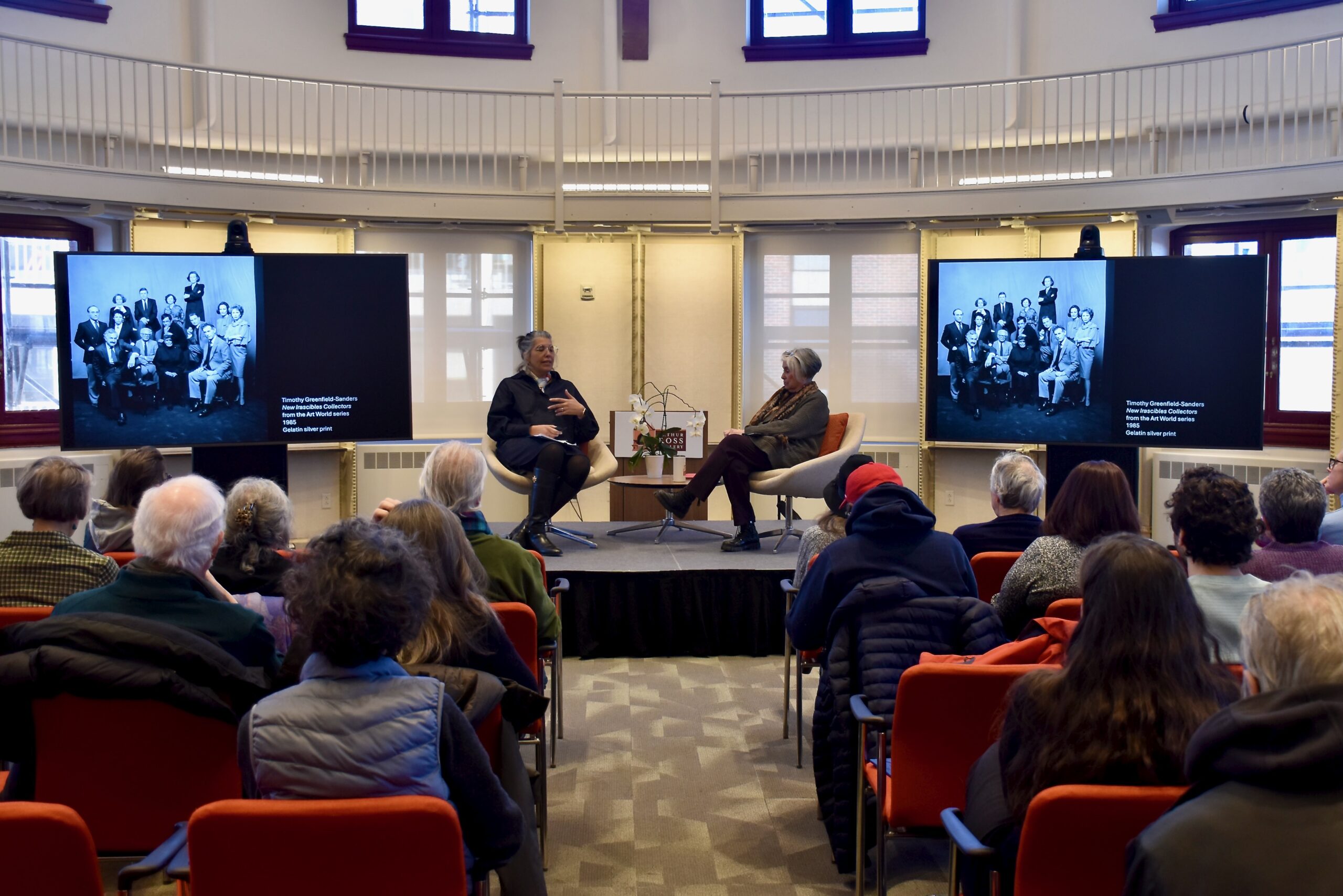
Gwendolyn DuBois Shaw (left), Arthur Ross Gallery Faculty Director, in conversation with Ruth Fine, formerly a curator at the National Gallery of Art in Washington D.C.
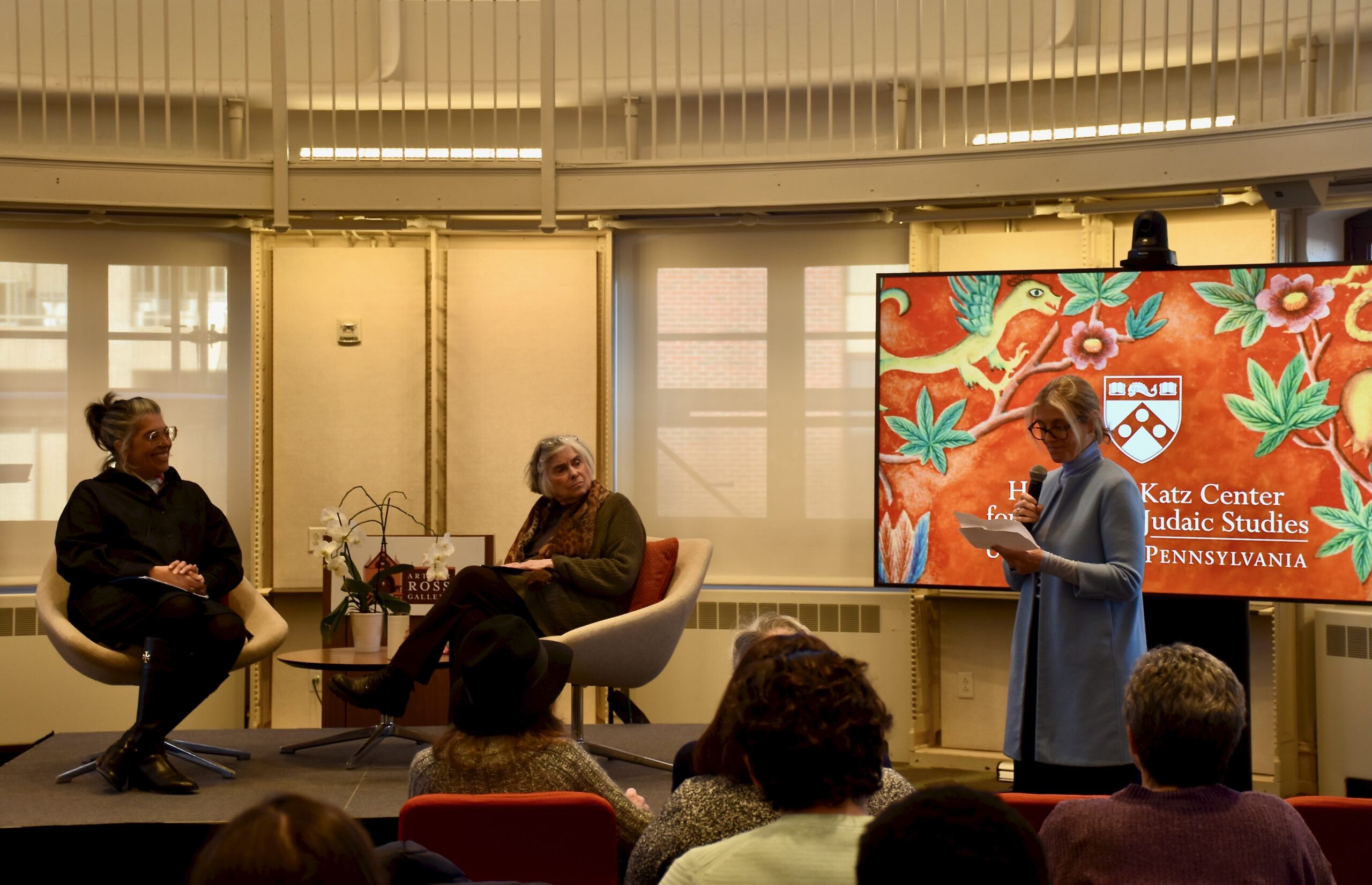
Giving the introduction was Natalie Dohrmann, associate director of Penn’s Herbert D. Katz Center for Advanced Jewish Studies, which co-sponsored the event.
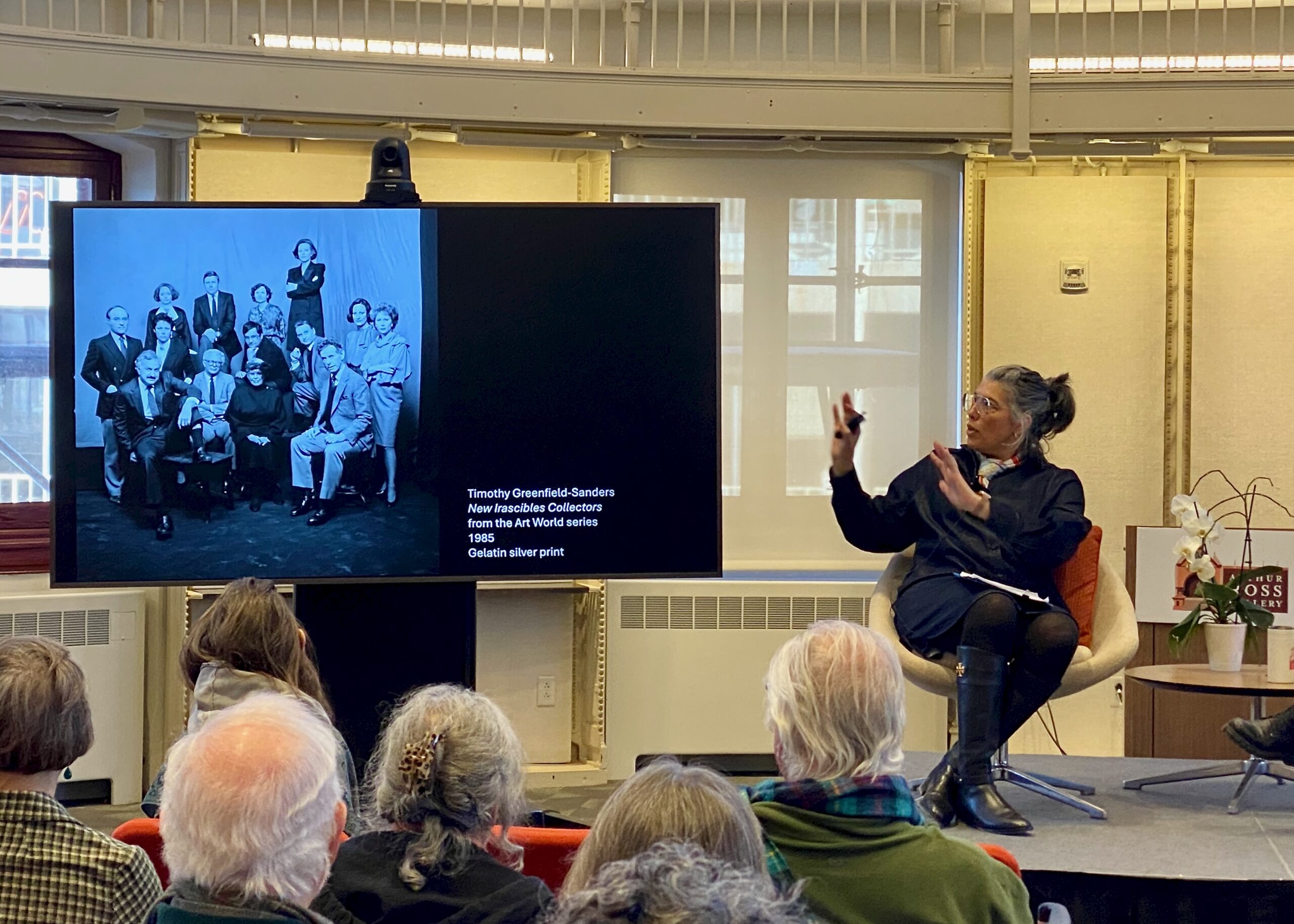
Gwendolyn DuBois Shaw describing the 1985 photograph of New York City art collectors by Timothy Greenfield-Sanders.
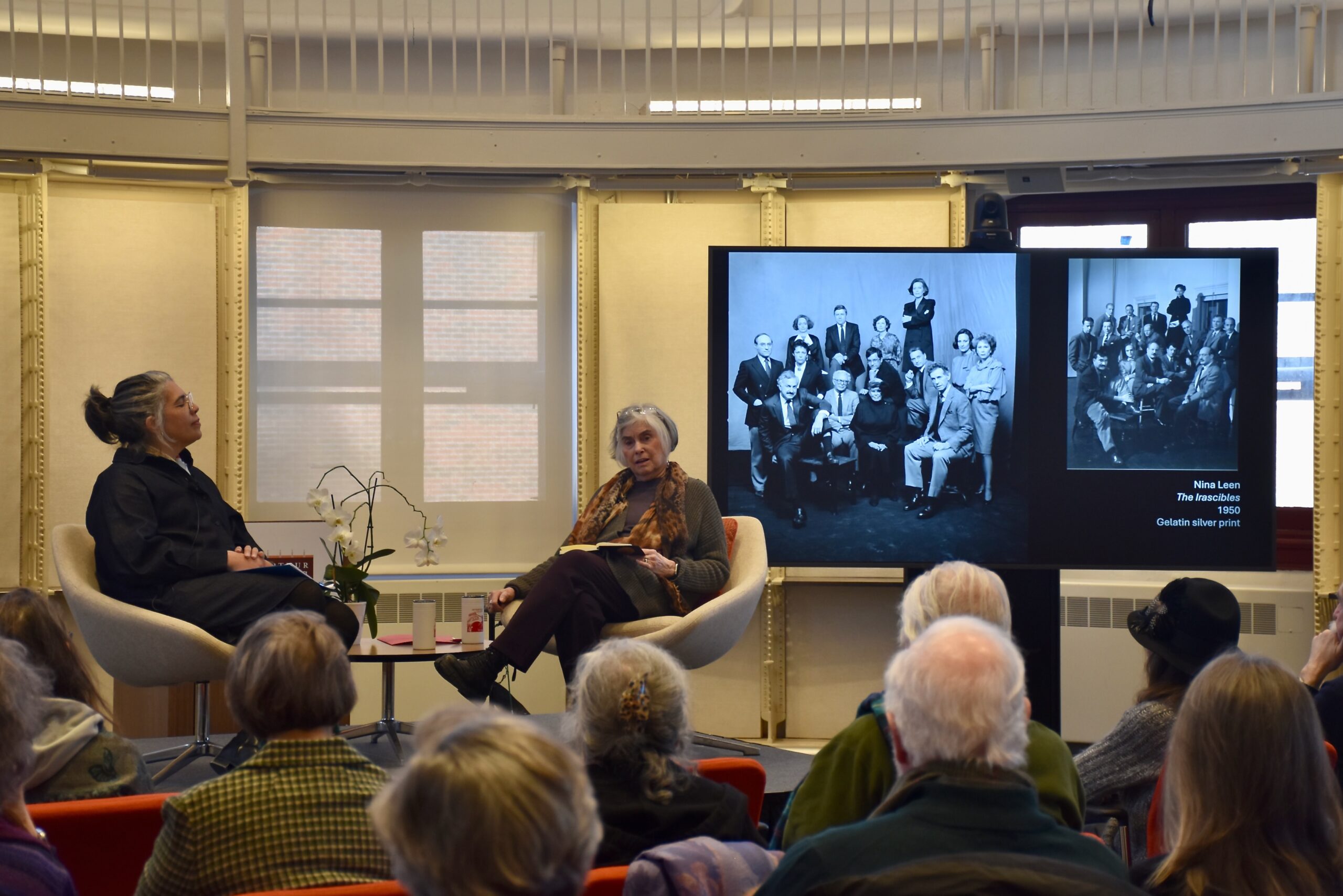
Ruth Fine (right) graduated with an MFA from what is now the Weitzman School of Design at Penn.
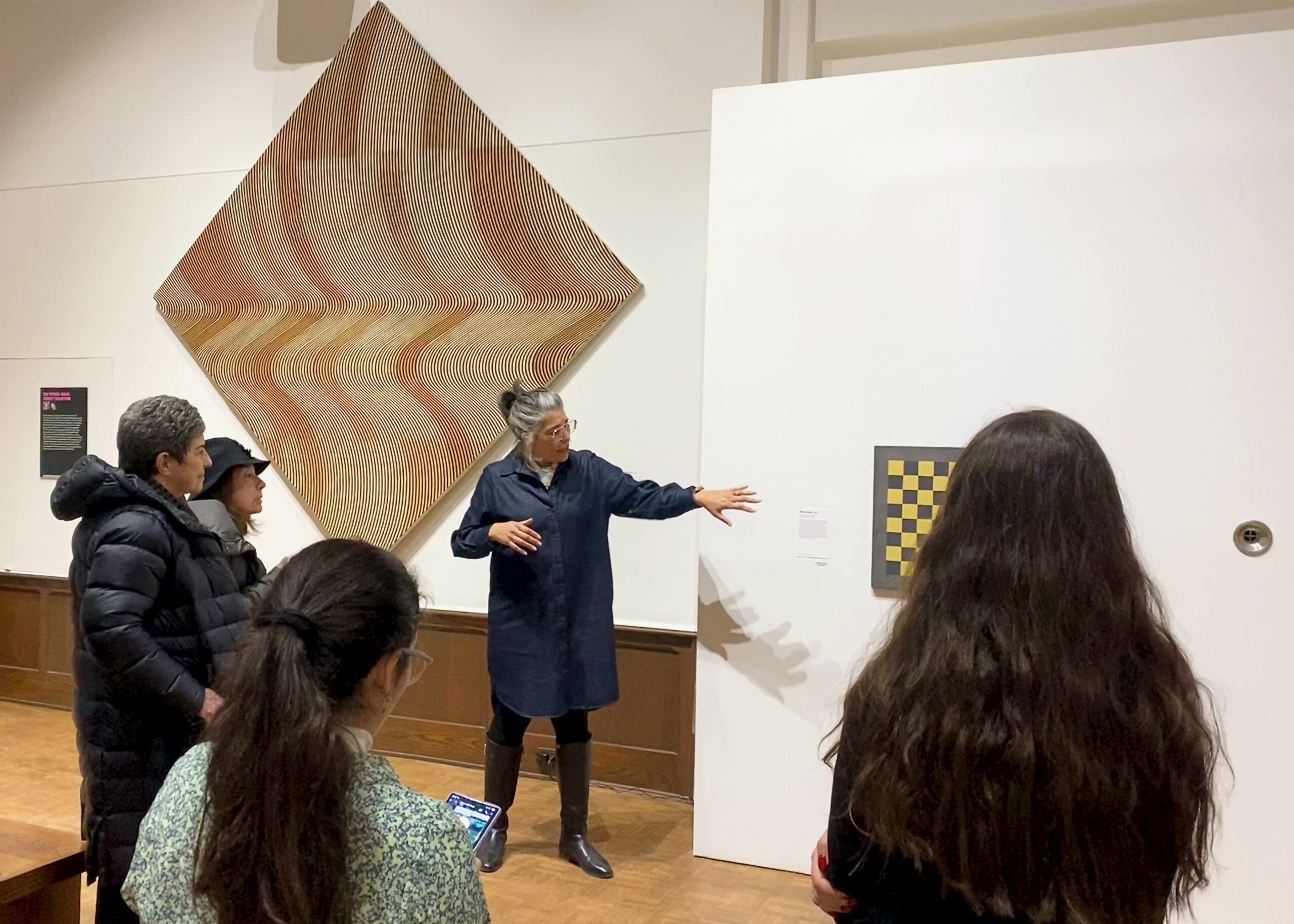
Gwendolyn DuBois Shaw leading a tour of the exhibition after the discussion.
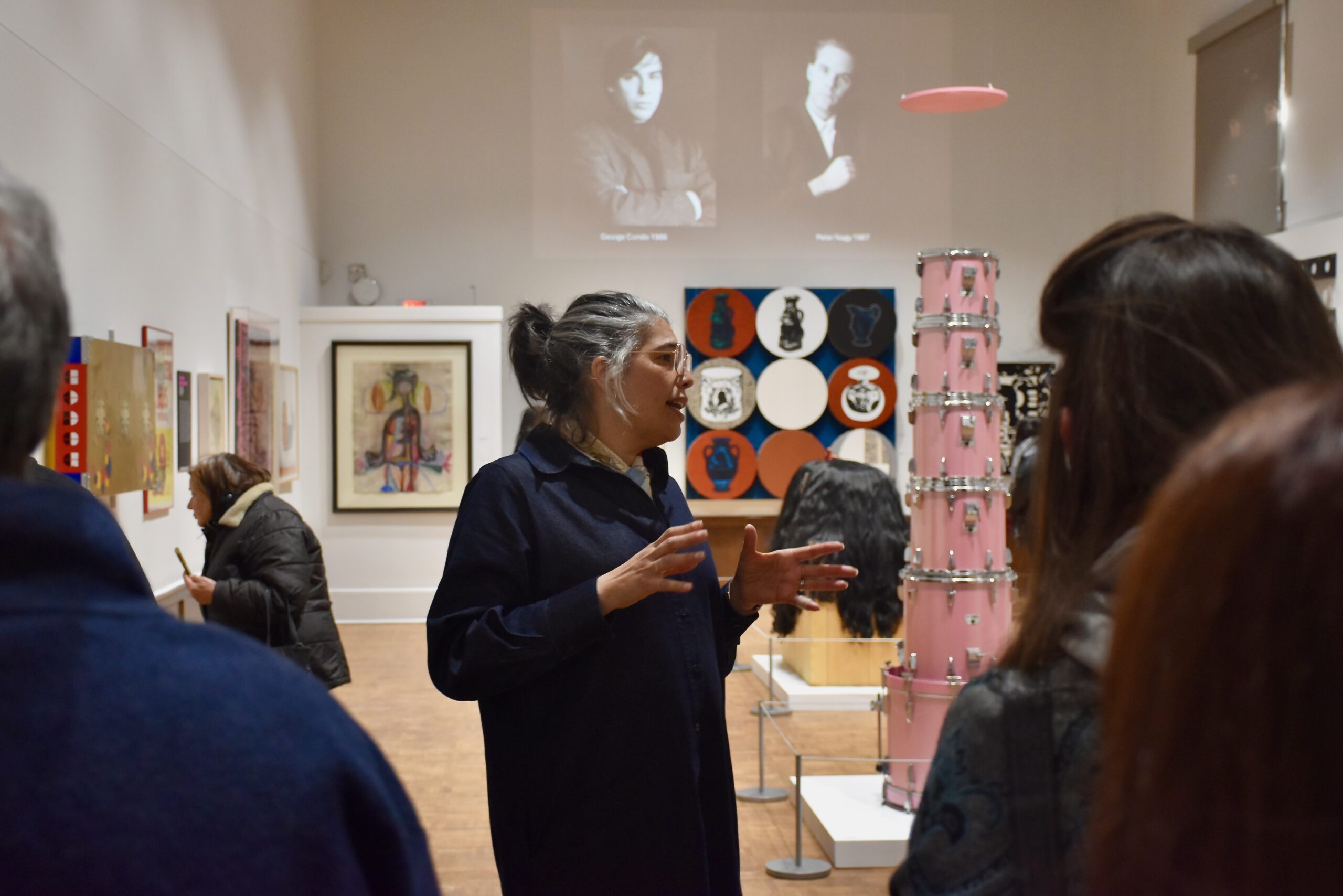
The tour included descriptions of the artworks.
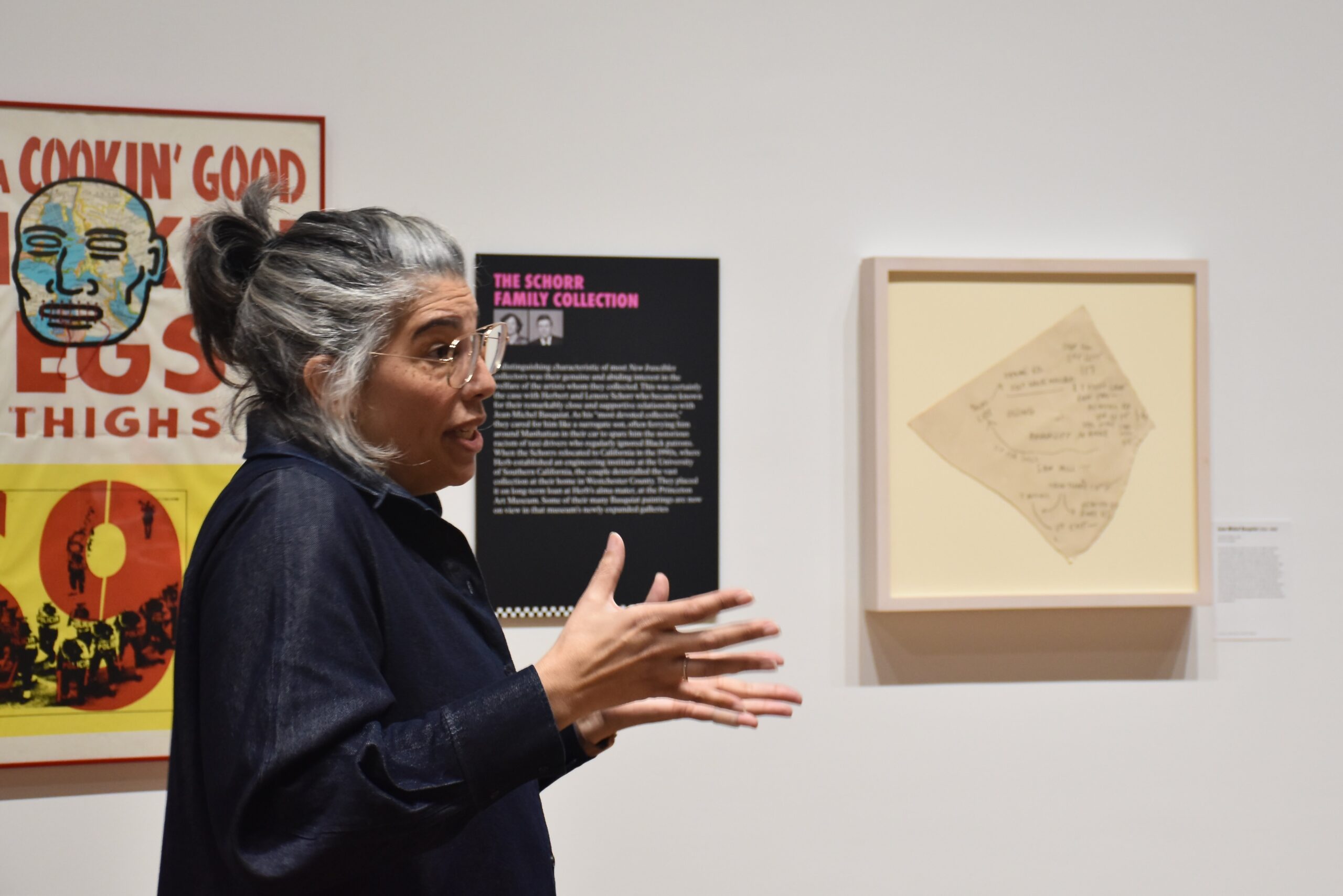
Gwendolyn DuBois Shaw told stories about the collectors and their connections with the artists.
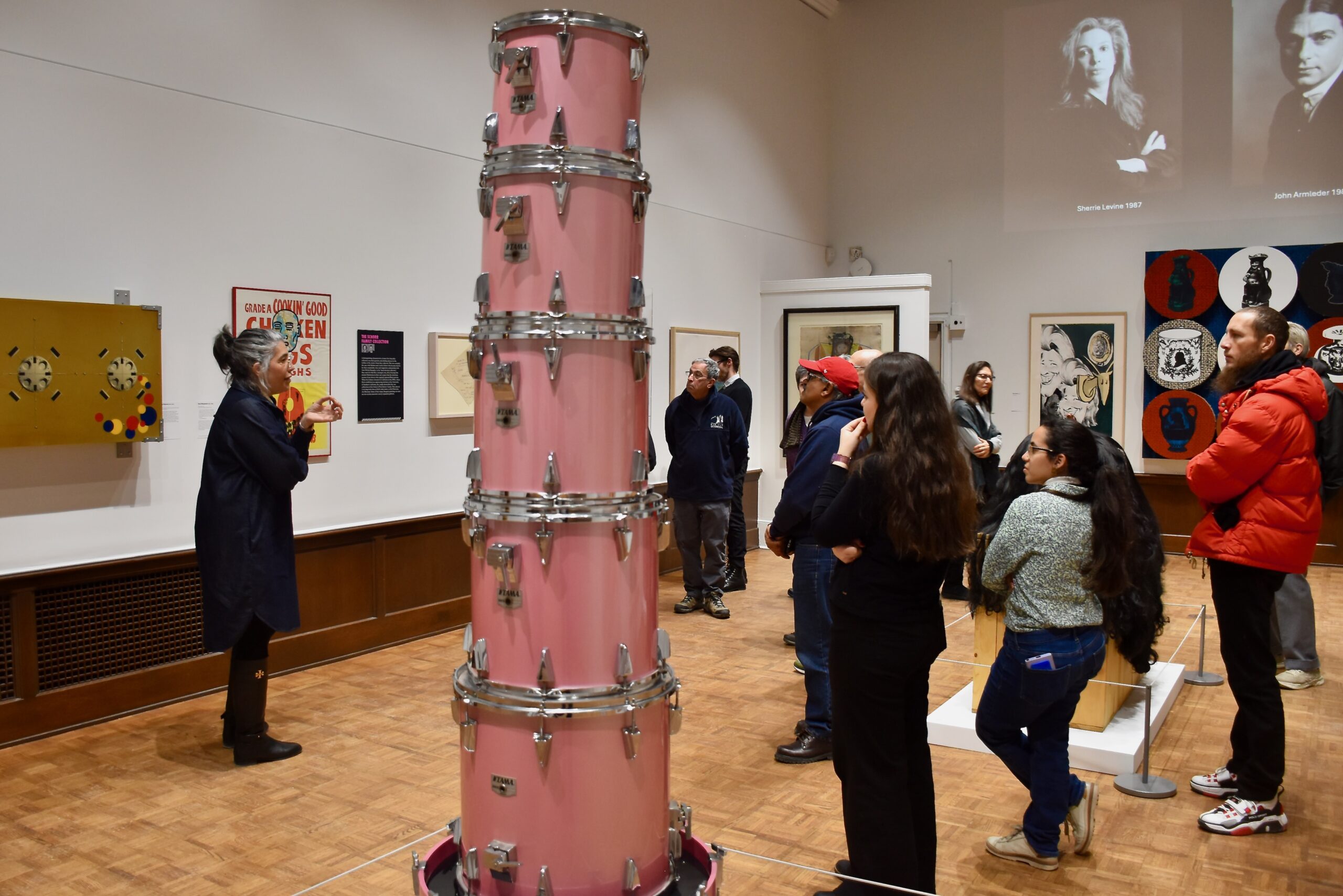
Several people on the tour asked questions about the artworks and the collectors.
Art collectors of Jewish-American heritage have had a significant impact on the trajectory of art history for well over a century. Their histories were the focus of “A Daring Vision: Jewish Collectors and Contemporary Art,” a discussion at the University of Pennsylvania between Gwendolyn DuBois Shaw, faculty director of the Arthur Ross Gallery, and Ruth Fine, a Penn alumna and former curator at the National Gallery of Art in Washington D.C.
About 50 people braved the winter cold to attend the hour-long discussion on Feb. 8, and many stayed for a tour of the accompanying Gallery exhibition Collecting the New Irascibles: Art in in the 1980s, on view through April 12.
Introductions were made by Natalie Dohrmann, associate director of Penn’s Herbert D. Katz Center for Advanced Judaic Studies, which co-sponsored the event. A recording of the discussion is available on the Arthur Ross Gallery’s You Tube page.
Shaw said the idea for the Collecting the New Irascibles exhibition came to her when she saw the1985 portrait, New Irascibles The Collectors (from the series Art World), by Timothy Greenfield-Sanders. The photo is in the collection of Hubert Neumann, a 1952 graduate of Penn’s Wharton School. “I said ‘Hubert, is that you?’” Shaw told the audience. And indeed, Neumann confirmed he is one of the 14 pictured, along with other ambitious and dedicated supporters of the era’s American art scene.
Shaw, also the James and Nan Wagner Farquhar Professor of History of Art, curated the current Arthur Ross Gallery exhibition with that photograph at the center. The 32 works by 22 artists are on loan from several of the families represented in the 1985 image. In addition to the Neumanns, the exhibition includes artworks loaned by the Schwartz, Spiegel, and Schorr families, all with connections to Penn, and the Rubell and Dannheisser families.
Greenfield-Sanders later told Shaw that when he gathered the collectors together for the photograph he realized all of them were Jewish. “I thought that was interesting,” said Shaw. “It’s all about these intertwining histories.”
Fine, who graduated in 1965 with an MFA from what is now Penn’s Weitzman School of Design, said many of the abstract artists at that time were Jewish. “In the early ’60s when I was a student here, many of these artists came to a seminar on Tuesday afternoons,” she said, noting that she was the only female student in the class. “As students here, we got introduced to some of the most important artists around, and other collectors.”
During the discussion Shaw talked with Fine about several prominent Jewish families who started collecting Contemporary art in the early 20th century, including the novelist and poet Gertrude Stein and her brothers, early supporters of Pablo Picasso and Henri Matisse; the Cone sisters, Claribel and Etta; and the Guggenheim family, Solomon and his niece, Peggy.
“What was very important is how much smaller the art world was then,” Fine said. “I think in those days, people really did buy and live with art because of the love of art. I’m not so sure that’s true today.”
Many collectors are more focused more on the potential value, Fine said, but the art market is unpredictable.
Buying Contemporary art “can be a really great way to collect at a price point that can be quite agreeable, taking that risk,” Shaw said, noting how many who started collecting decades ago invested in artists whose work became more valuable over time. “They would sell out of their collection to buy more art.”
Other collectors discussed included the Leonard Lauder family and the Walter Annenberg family, which both have connections to Penn.
Artists and collectors form relationships beyond collecting, Shaw said, citing several examples from the current exhibition.
“The art was a part of it, but the valuing each other on an intellectual level was something that sustained that relationship and made it continue when the art was changing,” Shaw said. “Earlier artists were also very, very close to their collectors, and earlier artists had similar discussions.”
A recording of the discussion is available on the Arthur Ross Gallery’s You Tube page. Read all about the opening reception for Collecting the New Irascibles: Art in in the 1980s exhibition on our Gallery Seen blog.