A revolutionary exhibition enjoys extraordinary attendance
September 16, 2026
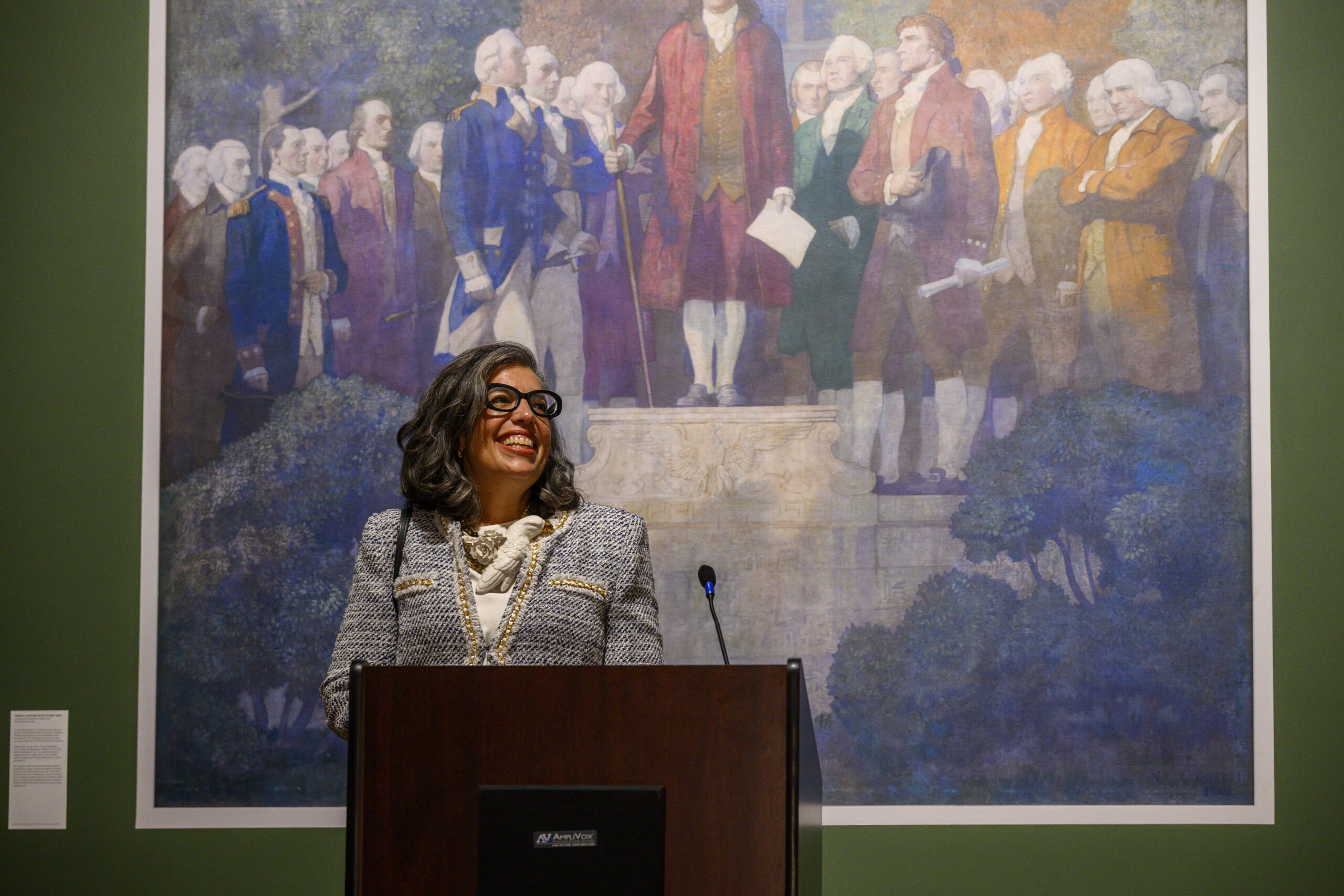
Exhibition Curator and Arthur Ross Gallery Inaugural Faculty Director Gwendolyn DuBois Shaw gives remarks at the opening celebration. Photo by Constance Mensh.
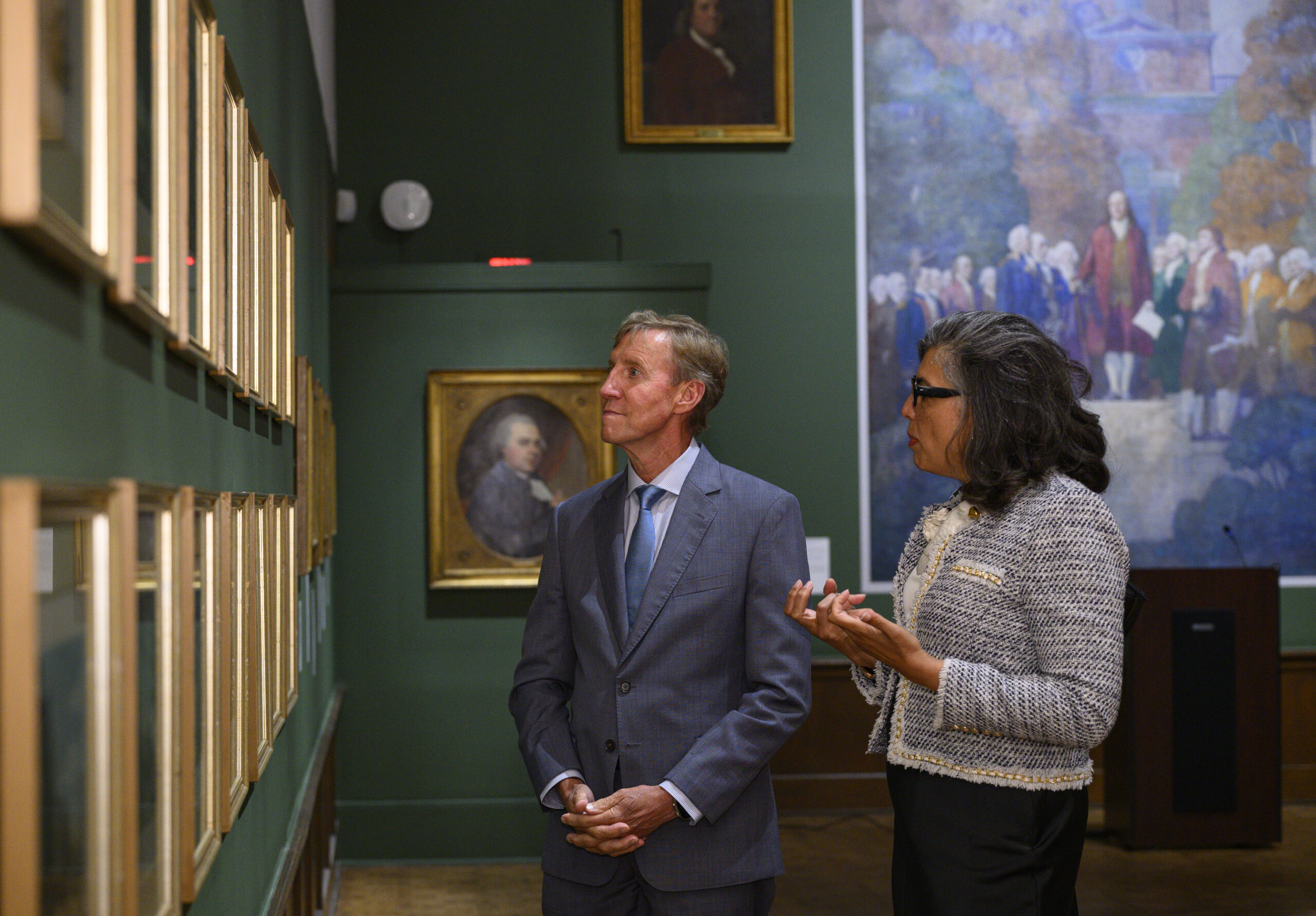
University of Pennsylvania President J. Larry Jameson tours the exhibition with Gwendolyn DuBois Shaw. Photo by Constance Mensh.
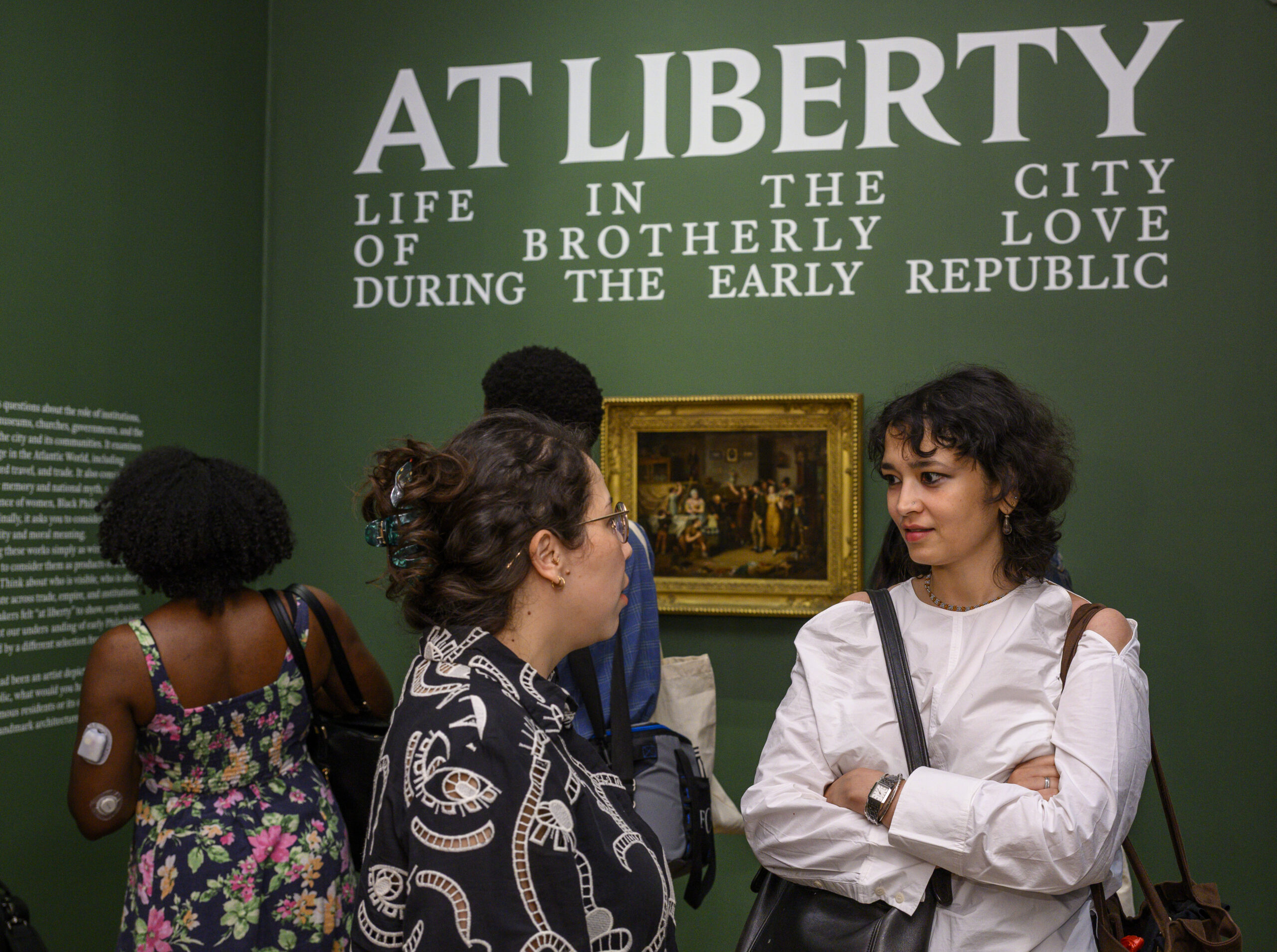
Guests gather in the vestibule of the gallery. Photo by Constance Mensh.
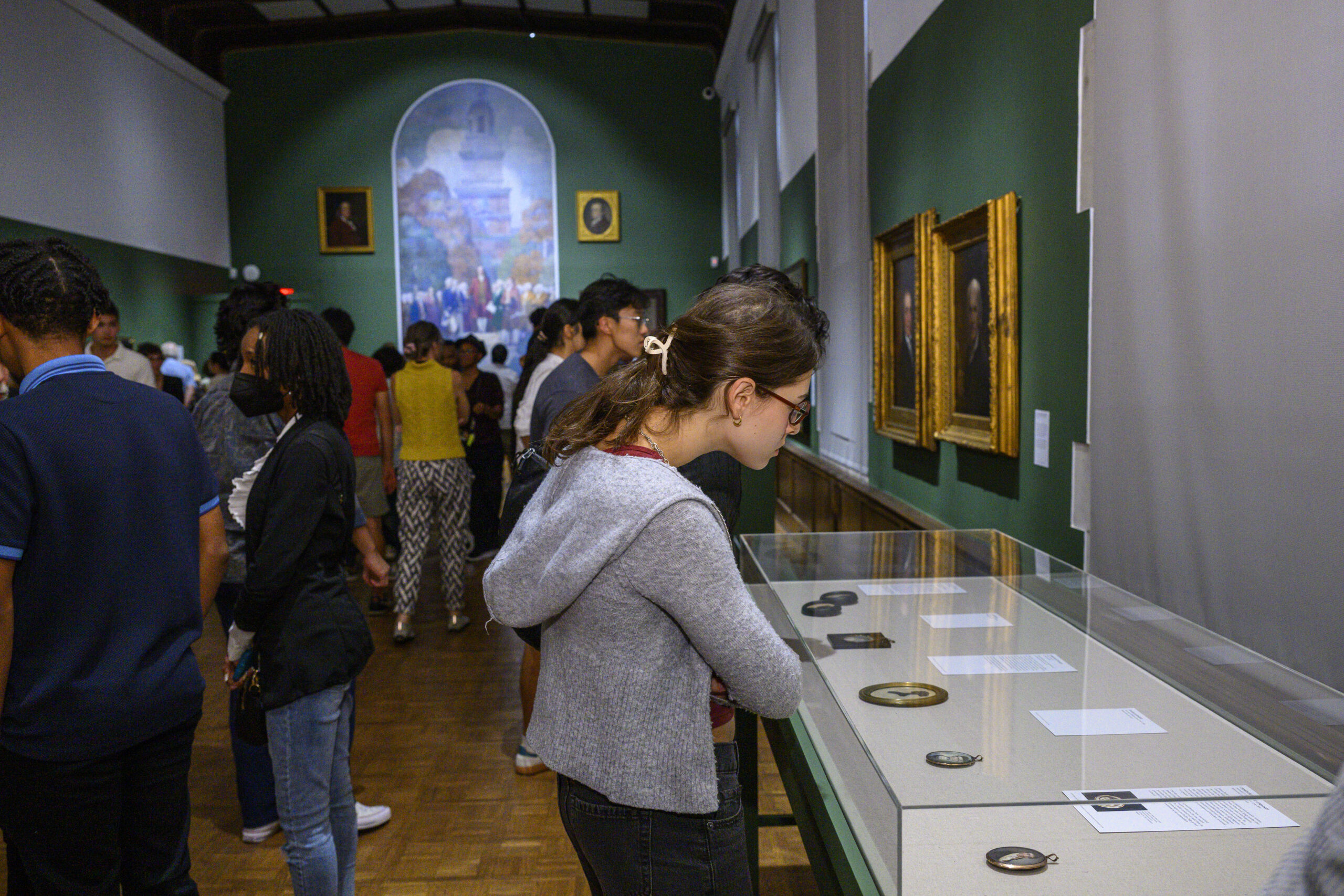
A guest examines a case with miniature portraits. Photo by Constance Mensh.
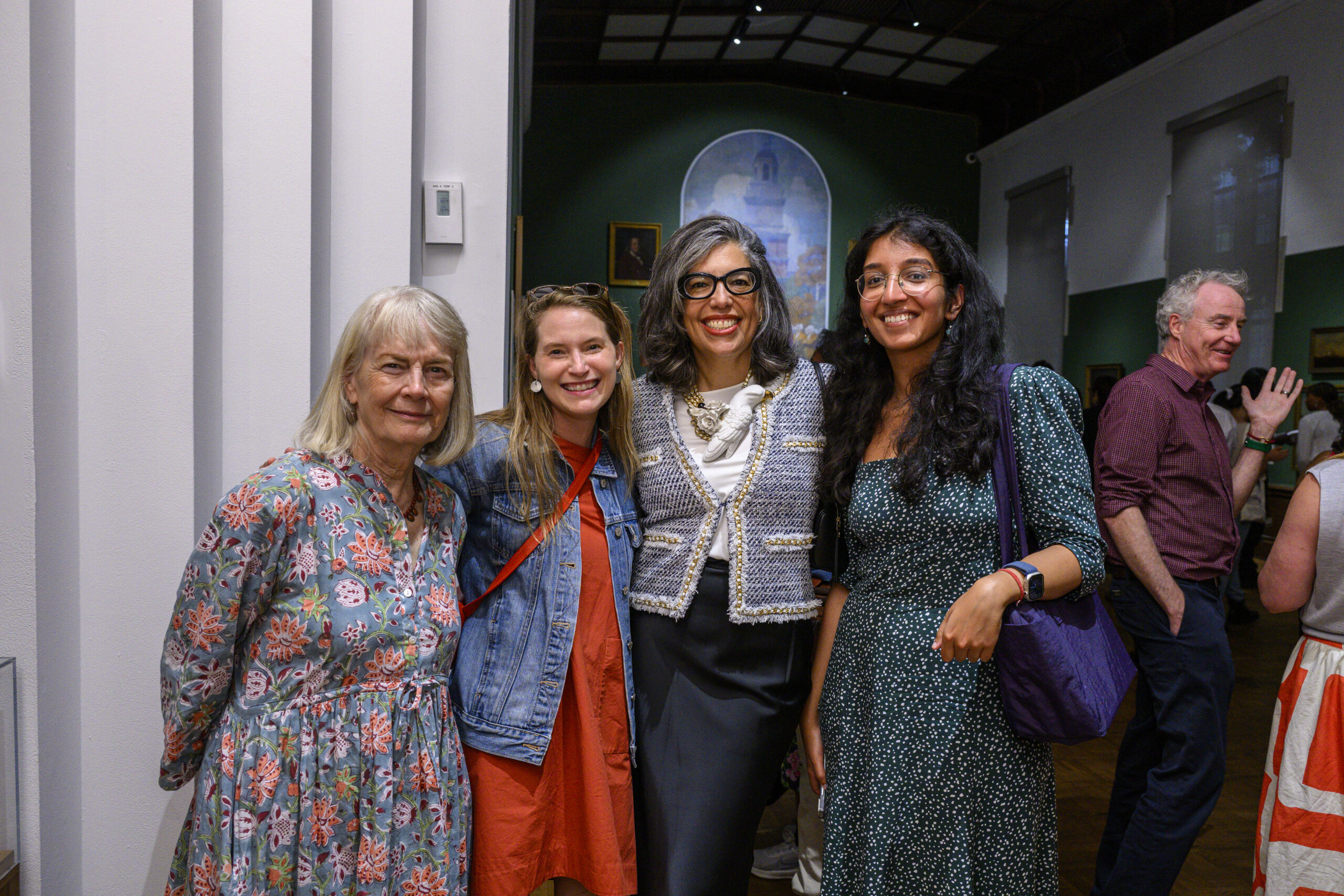
Gwendolyn DuBois Shaw with a group of guests including Kathy Foster and Ramey Mize from the Philadelphia Museum of Art and Rhea Swain, graduate student in History of Art Department. Photo by Constance Mensh.
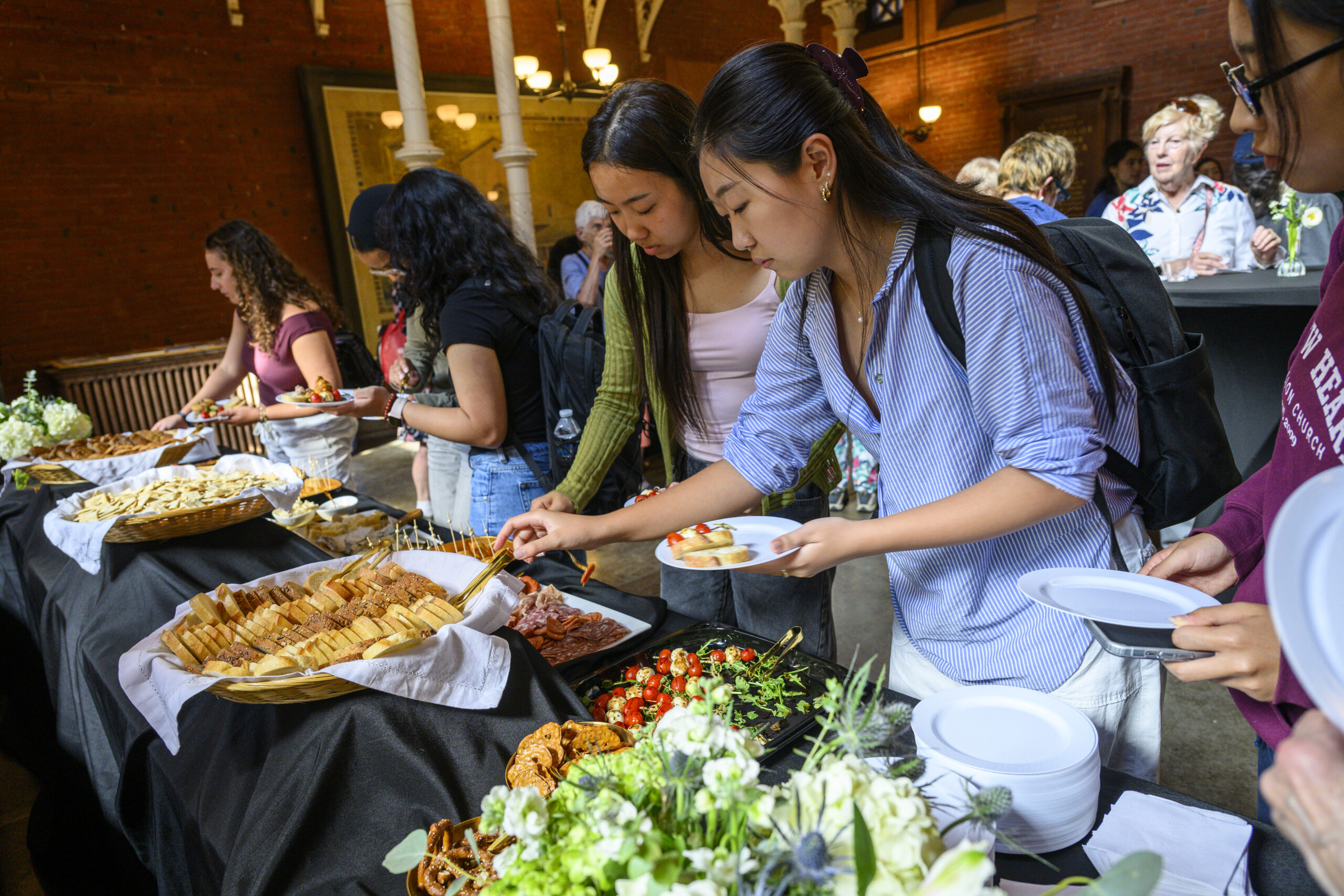
Guests enjoy light refreshments in the Fisher Fine Arts Library lobby. Photo by Constance Mensh.
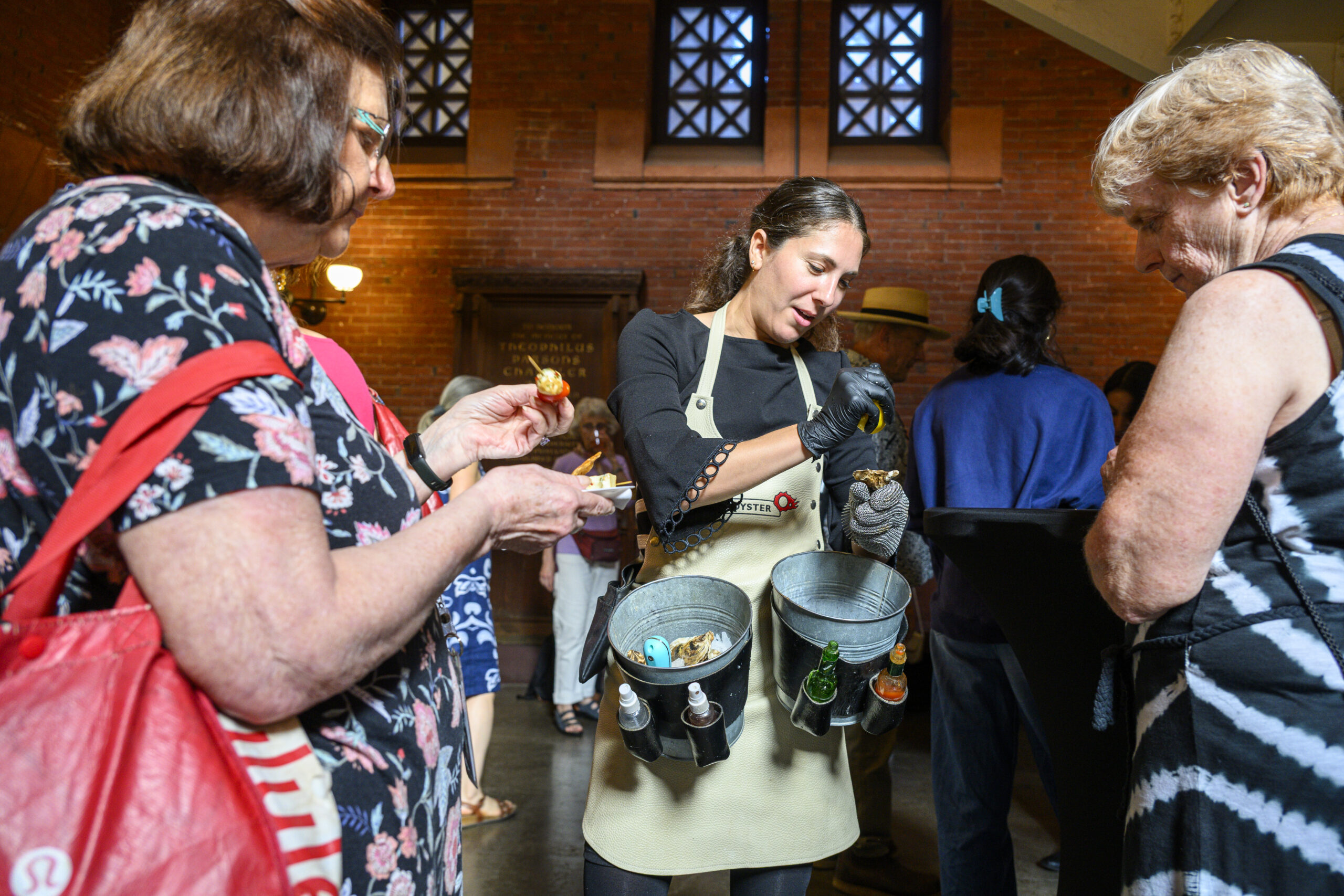
Guests enjoy live oyster shucking by Red Oyster USA. Photo by Constance Mensh.

Gwendolyn DuBois Shaw with Ann Blair Brownlee & David Brownlee, Professors Emeritus, History of Art Department. Photo by Constance Mensh.
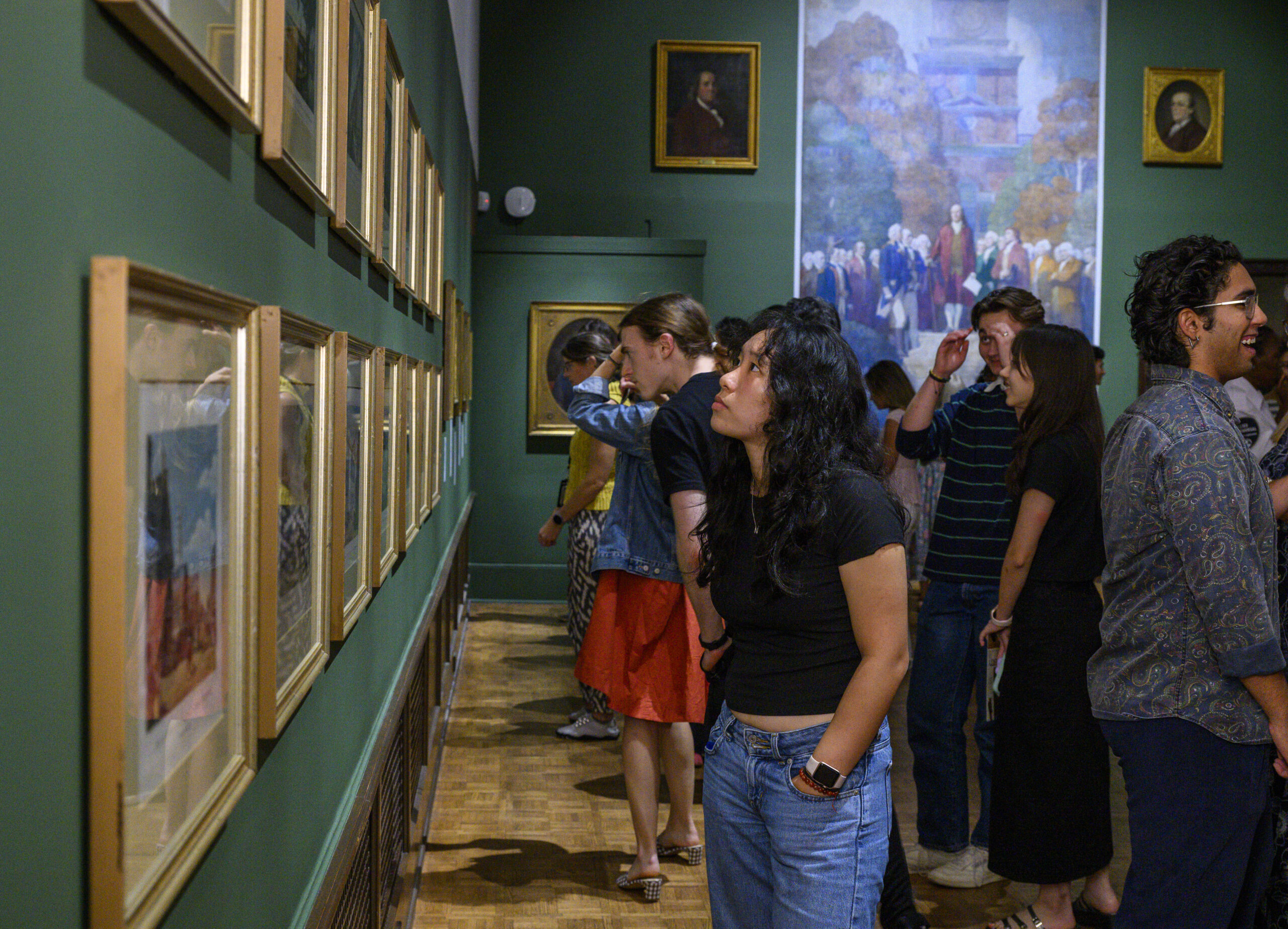
A guest observes artwork in the gallery. Photo by Constance Mensh.
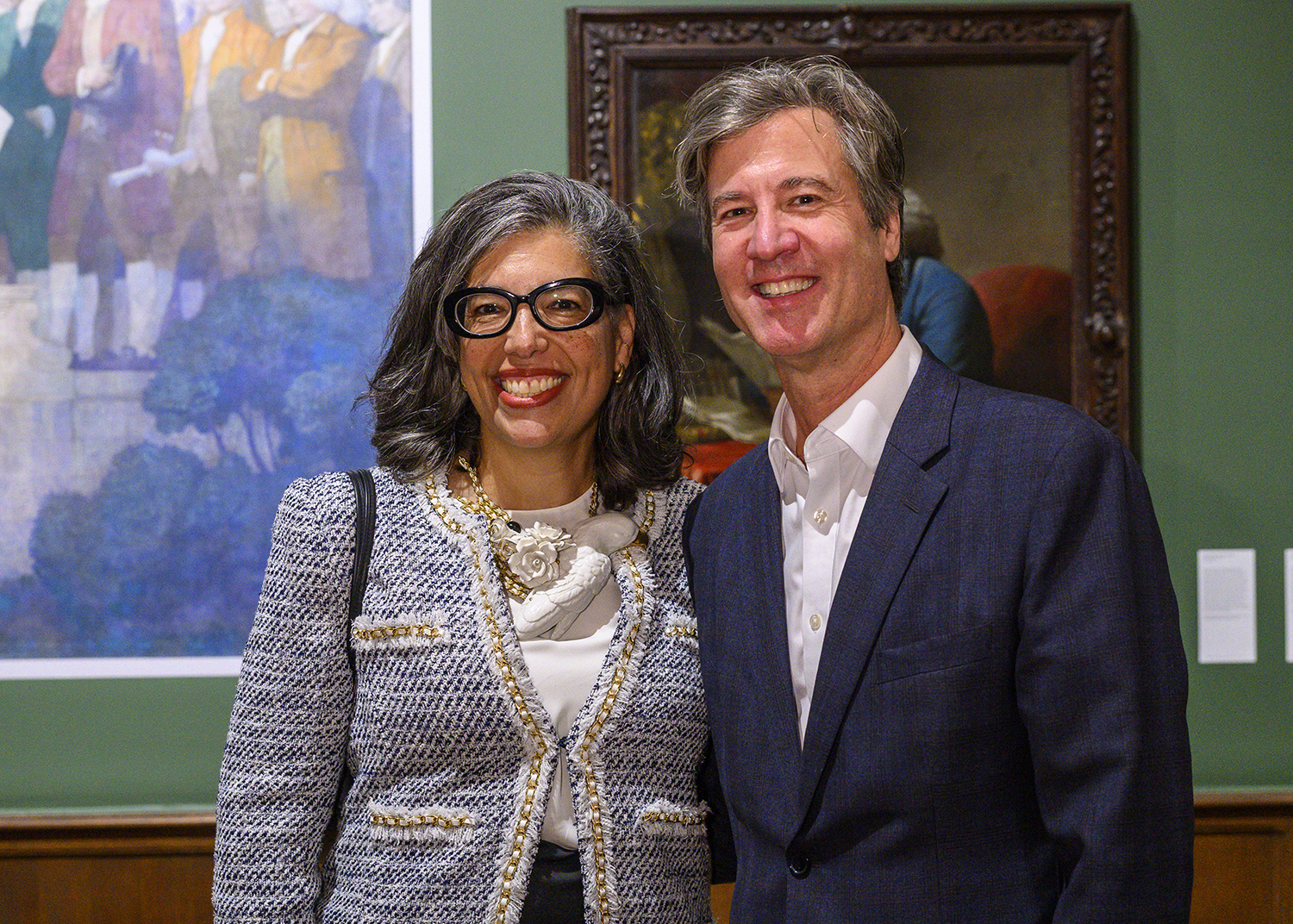
Gwendolyn DuBois Shaw and College of Arts & Sciences Dean Peter Struck after their remarks. Photo by Constance Mensh.
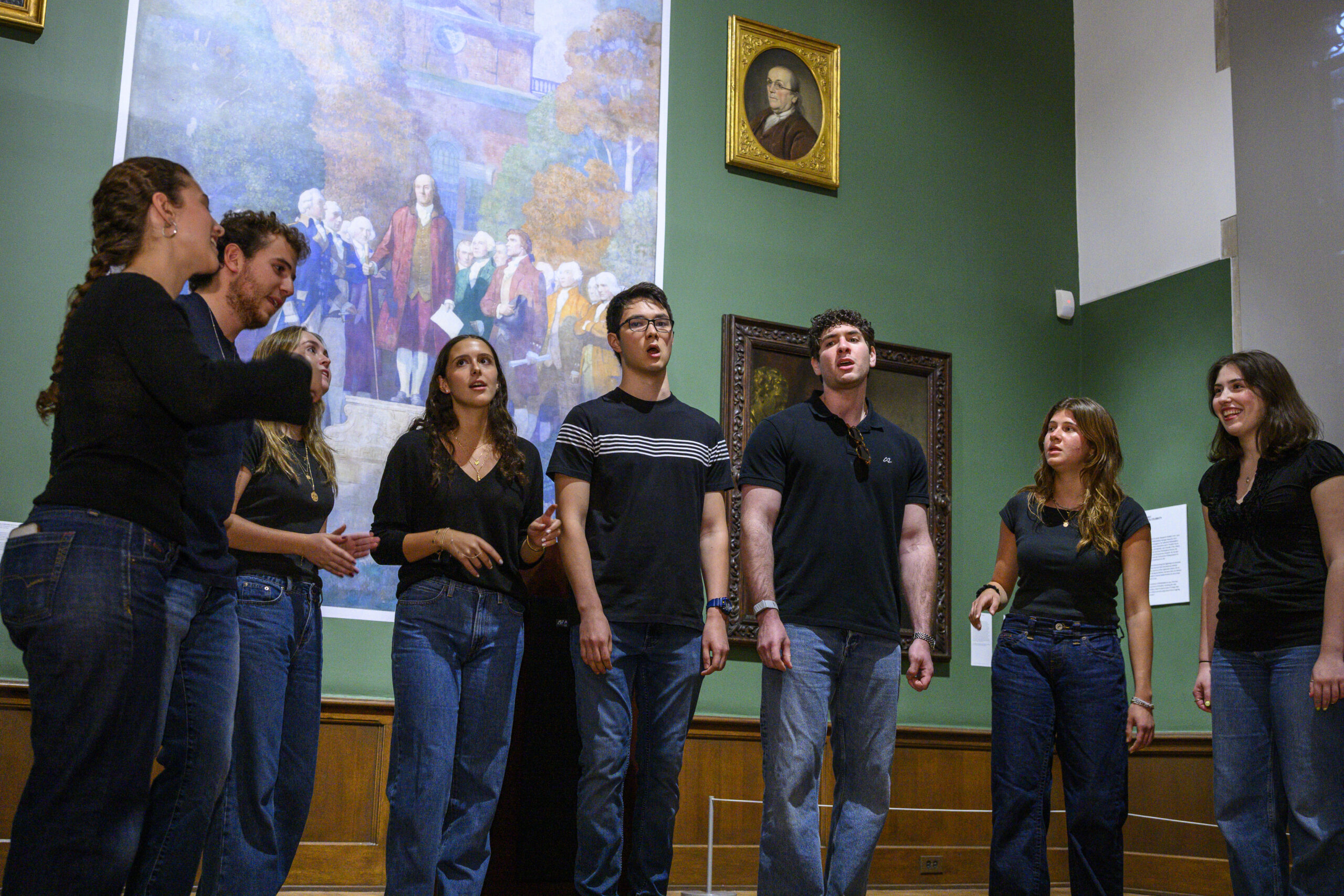
The Penn Shabbatones student a cappella group performs. Photo by Constance Mensh.

Crowds gather and converse in the gallery. Photo by Constance Mensh.
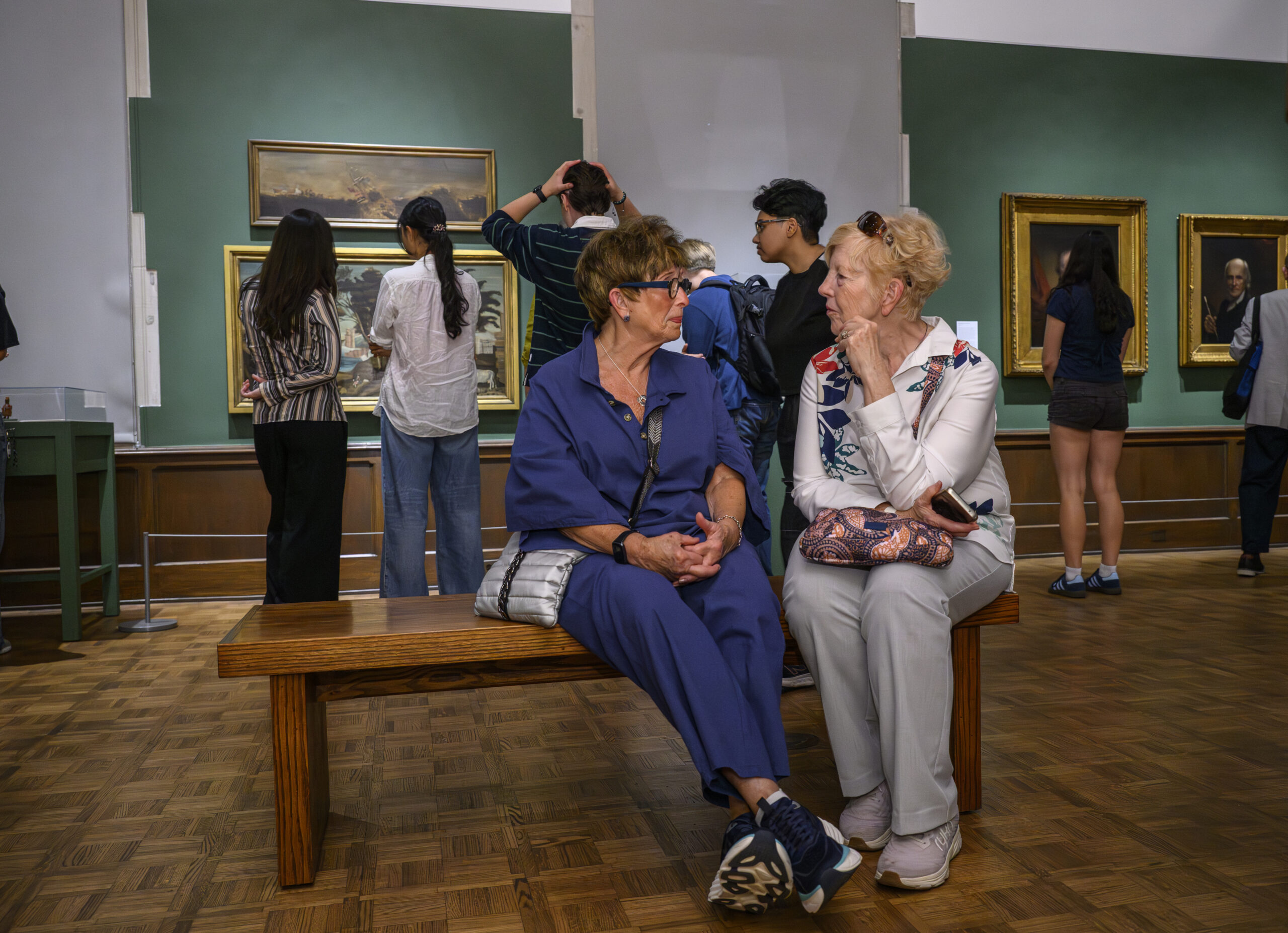
Crowds gather and converse in the gallery. Photo by Constance Mensh.
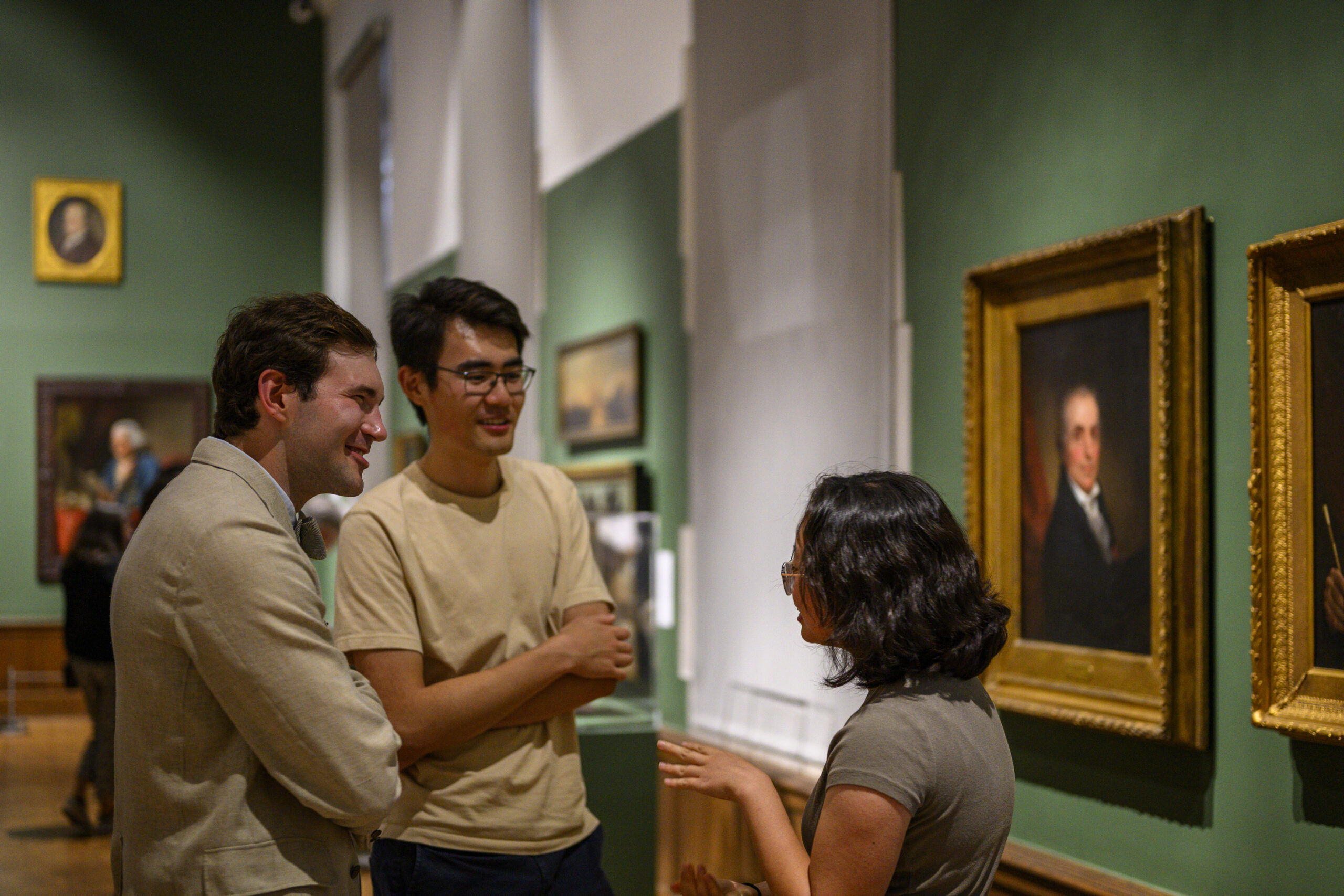
A group of students enjoy the reception. Photo by Constance Mensh.
Hundreds come to the opening reception for At Liberty: Life in the City of Brotherly Love During the Early Republic at the Arthur Ross Gallery.
They came early for the oysters and stayed for the early American art.
More than 300 people attended the opening reception for At Liberty: Life in the City of Brotherly Love During the Early Republic, the Arthur Ross Gallery exhibition that examines Philadelphia and its residents, including America’s first international celebrity Benjamin Franklin, in the decades around the nation’s founding.
Many at the Sept. 9 event were faculty and students, as evidenced by the bins full of backpacks at the entrance. When not in the gallery, guests lined up at the oyster-shucking station in the lobby. A common street food in Philadelphia two centuries ago, the fresh oysters were a nod to the drawing Nightlife in Philadelphia—an Oyster Barrow in front of the Chestnut Street Theater attributed to artist John Lewis Kimmel, one of six rarely seen watercolors in the exhibition from the Metropolitan Museum of Art.
On view through Dec. 13, the At Liberty is curated by Gwendolyn DuBois Shaw, Inaugural Faculty Director of the Arthur Ross Gallery, and the James and Nan Farquhar Professor of the History of Art at the University of Pennsylvania.
“I am thrilled to see so many professors and students here, and so many friends and colleagues in the Philadelphia art community, taking time to look at the objects and read their stories,” Shaw said. “It’s exciting to see so many people so excited about historical American art.”
Shaw has been working on the exhibition for nearly a decade, looking to 2026. “As we mark 250 years as a nation, we have an opportunity to ask not only what happened in 1776 and the era of the early republic that followed, but what have the first ideals articulated then meant over the intervening centuries, and how Americans have debated, expanded, challenged, and sometimes fallen short of those ideas,” Shaw said during remarks to the guests filling the gallery.
“The semiquincentennial of the United States gives us the reason to look backward,” she said, “but it also gives us an opportunity to think forward. What kind of society are we building? And what can we learn from the arguments and aspirations of those who came before us?”
Peter Struck, the Stephen A. Levin Family Dean of the College of Arts & Sciences and the Vartan Gregorian Professor of Humanities, said during his remarks that the exhibition is an invitation to look closely at these objects and images and “ask questions that resist easy answers” about history and what it means today.
“This exhibition embodies part of the great purposes of arts and sciences education, learning how to see the world from more than one perspective and to make connections across different fields of knowledge. The humanities teach us to pay attention and assert learning to language, images, stories, narrative, and historical context,” he said, looking out to the filled gallery. “As my students here know, history is life.”
Several Penn faculty plan to incorporate At Liberty into their coursework this semester, Shaw said, including those in history, art history, and integrated studies.
The over 40 works on view are on loan from cultural institutions including the Penn Art Collection, the Pennsylvania Hospital, the Pennsylvania Academy of Fine Arts (PAFA), the Winterthur Museum, and the Metropolitan Museum of Art. The objects – including paintings, prints, drawings, and sculpture — portray notable figures alongside depictions of daily life in Philadelphia. A video produced by students in Drexel University’s Peale Project that uses artificial intelligence to examine historical material asks viewers to think about how contemporary visual images made with digital assistance can change our understanding of the past.
An important focus for Shaw in At Liberty is Benjamin Franklin, Penn’s founder. The exhibition has five different depictions, including a 1767 portrait by David Martin on loan from PAFA that was Franklin’s, and was a favorite of himself.
Franklin had a special relationship with artists as the most-representative American in the 18th century, “the exemplary Philadelphian,” Shaw said in an interview, with more than 200 distinct portraits in various media made during his lifetime. “I want to contrast that celebrity and that singular man with life on the street, how people who lived in Philadelphia encountered it, and how they understood the importance of the city,” Shaw said.
A collection of prints by William Birch and his son Thomas Birch, The City of Philadelphia in the State of Pennsylvania, North America; as it appeared in the Year 1800, from the Penn Art Collection emphasize Philadelphia as a modern city with beautiful architecture, showing a very diverse population.
A suite of watercolors by Krimmel from around 1813 depict typical street scenes, including Oyster Barrow, that show people of color in everyday life, works that are rarely exhibited given the fragile nature of the works on paper. As an art history student and as a professor, Shaw said artworks depicting Black people in the 18th and 19th centuries are scarce and were important to her to include.
Three members of Philadelphia’s famous Peale family of artists are represented, including a 1785 portrait of Franklin by Charles Willson Peale, one of the founders of PAFA, the center for artistic training for most of the nation’s history. Shaw chose to paint the gallery walls a deep historic color named “Peale Green.”
Just before the doors opened for the event Friday, Shaw gave Penn President Larry Jameson a 30-minute tour and pointed out works from Penn’s art collections. Highlights include a recently restored portrait of British abolitionist Samuel Romilly by the artist Gilbert Stuart (known for his portrait of George Washington on the one-dollar bill) that hung for many years in Houston Hall, and two rarely seen landscapes by the American-born, English-trained painter Benjamin West, given to Pennsylvania Hospital in the 18th century, that also received significant conservation work.
During the reception the Penn Shabbatones student a capella group performed, and a special pop-up exhibition of rare Revolutionary era pieces in the Penn Libraries collection was on view in the Fisher Fine Arts Library.
“To all of you, and especially our students,” Struck said to the crowd, “please bring your curiosity, bring your skepticism, look closely, question what you think you know, and allow these objects to complicate the story that belongs to all of us.”
Related Events
Tours with Penn student Gallery Guides: Penn students will be available in the Gallery for tours on most Saturdays and Sundays from 12:00-3:00 p.m., and Wednesdays from 4:00-6:00 p.m.
Penn Lifelong Learning Lecture: Wednesday, Nov. 11, 12:00-1:00 p.m. online. Exhibition curator Gwendolyn DuBois Shaw and Lynn Smith Dolby, Director of the Penn Art Collection, will lead a virtual exhibition tour, followed by a Q&A. Register here.
Artist lecture: Thursday, Oct. 22, 5:00 p.m. in the Gallery. Conceptual artist Eileen Neff will preview a photographic installation, Through That Which Is Seen, in a lecture. This project explores the history of dioramas from Peale’s Museum to the current renovations being undertaken at the Academy of Natural Sciences of Drexel University.
Curators’ Conversation and Homecoming Weekend in-person tour: Saturday, Nov. 14, 2:00-4:00 p.m. in the Gallery. Curator Gwendolyn DuBois Shaw will lead a conversation about exhibiting early American art and history during “America 250,” with Penn School of Arts & Sciences alumnae Sylvia Yount, G’90 and GR’95, the Lawrence A. Fleischman Curator in Charge of the American Wing at the Metropolitan Museum of Art, and Jill Vaum Rothschild, G’14, GR’21, Associate Curator of Fine and Decorative Art at George Washington’s Mount Vernon. The panel will be followed by a tour of the exhibition as part of Penn’s Homecoming Weekend activities. Register here.
The “At Liberty” exhibition is supported by the Wyeth Foundation for American Art and the Philadelphia Cultural Fund.